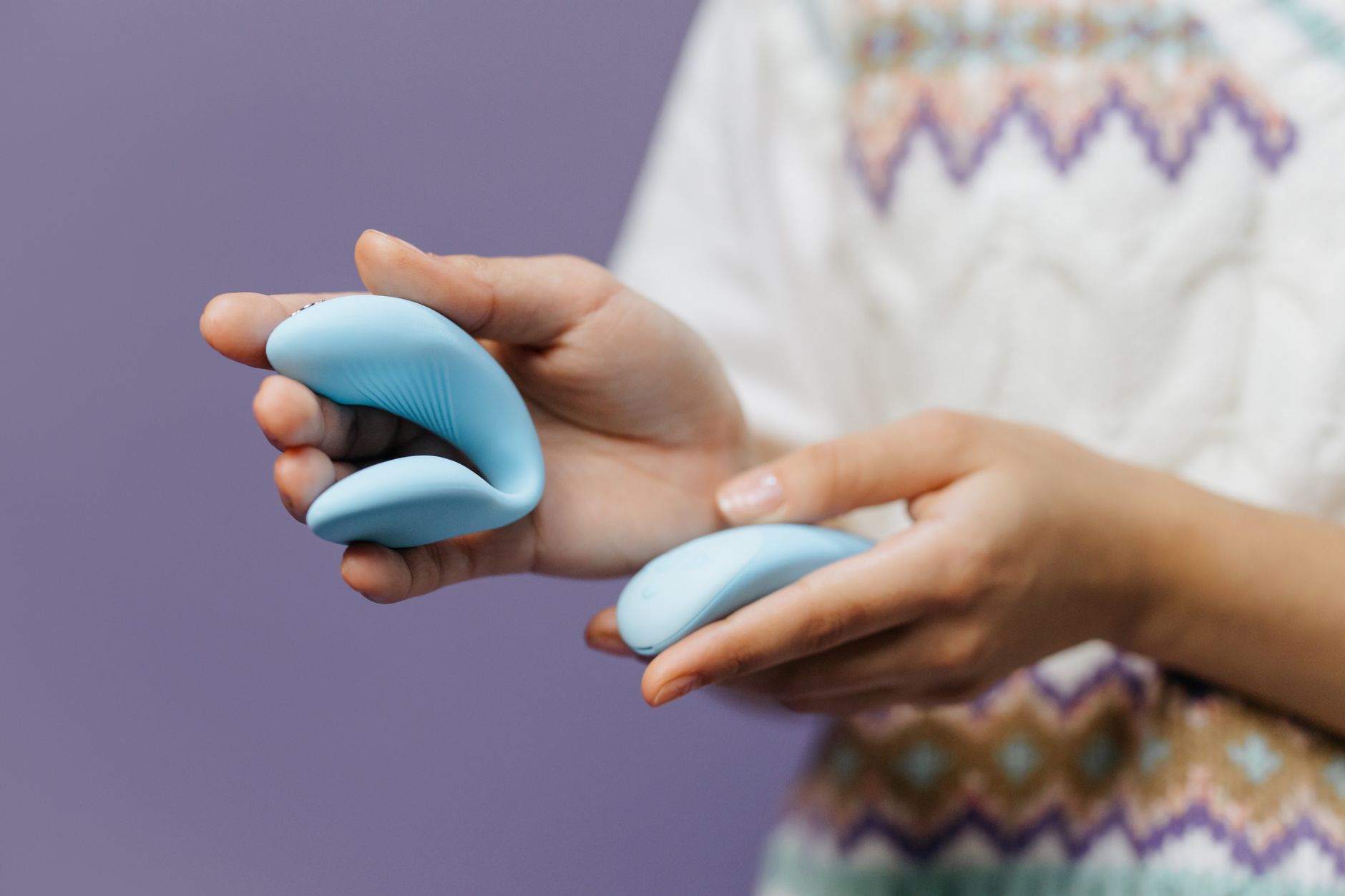
Best Lemon Vibrator Settings for Different Clitoral Sensitivity Levels
Here's the thing nobody tells you: your clitoris has preferences. Not moods, not "it depends on the day" (though that's real too). Actual, biological sensitivity preferences that mean one intensity setting feels perfect and another feels like a jackhammer made of regret.
I work with couples who think they've got a pleasure problem when really they've got a settings problem. They load up a lemon vibrator on pattern 8, it's too much, they assume their body is broken, and they shelve the toy for six months. The real story? Pattern 3 would have been transcendent.
Why clitoral sensitivity is wildly different for everyone
Your clitoris has 8,000 nerve endings packed into a structure smaller than a pea. That density means sensation travels fast and feels intense. But "intense" is relative. Some people's clitorises are wired to light up at gentle touch. Others need serious pressure to even register stimulation. Neither is better or worse. They're just different hardware.
Three biological factors shape your baseline sensitivity:
Nerve density and distribution. Some people have more densely clustered nerve endings in the glans (the tip), others feel more sensation along the sides. A lemon vibrator pattern that rides beautifully for one person might miss the sweet spot for another.
Hormonal phase. If you menstruate, your clitoral sensitivity shifts across your cycle. Right before your period, many people report heightened sensitivity and faster arousal. Around ovulation, some find they need stronger stimulation to reach orgasm. Tracking which patterns work in which weeks is genuinely useful data.
History and conditioning. If you've spent years masturbating with lots of pressure, light touch might feel frustratingly vague at first. Your body has learned to expect that intensity. The good news: you can gradually retrain your sensitivity if you want to. The better news: you don't have to.
The lemon vibrator pattern breakdown for light sensitivity
If your clitoris feels like it's wearing a sensitive jacket, here's what to know.
Patterns 1 and 2 on a lemon clitoral vibrator are your entry point. These are sub-threshold settings, meaning they're below the intensity most people think of as "vibration." Pattern 1 is almost a hum. It feels more like sustained pressure than buzzing. Many people with sensitive clitorises report that pattern 1 alone can bring them to orgasm, especially when they're already warmed up.
Start with the lemon sucker positioned directly over your clitoris, minimal pressure, about 10-15 minutes of focus time. Don't rush. Light sensitivity typically means you need more time to build arousal, not less stimulation. The lemon vibrator is doing the work. Your job is to breathe, stay present, and let sensation build.
Pattern 2 adds a tiny bit more intensity, still gentle. Think of it as a step up, not a leap. Use this when pattern 1 starts to feel predictable, or if you're in a later phase of your cycle when sensitivity naturally increases.
The mistake people make with sensitive clitorises is assuming "more patterns" means "better sex." It doesn't. For light sensitivity, patterns 1-3 might legitimately be all you ever need. Some of my clients have reported their most intense orgasms using nothing but pattern 1.
The sweet spot for medium sensitivity
Most people land here. Not too tender, not needing a power tool to feel anything. You can handle direct touch, but sustained intensity gets uncomfortable.
Patterns 3-5 on the lemon clitoral vibrator are your zone. Pattern 3 has actual vibration now, noticeable but not aggressive. Pattern 4 is where most first-time lemon vibrator users land. It's strong enough to feel genuinely pleasurable without that numb-your-face feeling that pattern 7 brings.
For medium sensitivity, the real skill is understanding what "direct touch" means. The lemon sucker works through gentle suction, not pressure, which is already gentler than traditional vibrators. You might use it at full contact over the clitoris for patterns 3 and 4, then shift to side contact (stimulating one side of the clitoris rather than the tip) if it starts feeling like too much.
That positioning shift matters more than you'd think. Some people who swear they can't handle pattern 5 find that shifting from center to side contact makes pattern 5 feel perfect. You're not changing the toy. You're changing the nerve endings that receive the stimulation.
Honestly? If you're buying your first lemon vibrator and you're not sure where you fall on the sensitivity spectrum, start at pattern 4. Spend five minutes here. If it feels like nothing is happening, move to pattern 5. If it feels too sharp or overwhelming, move to pattern 3. Most people find their home pattern within two sessions.
High-intensity clitorises and finding your power zone
If light touch feels pointless and you've historically needed firm pressure or serious speed to feel anything, you're wired for intensity. Your clitoris is hungry.
Patterns 6, 7, and 8 on a lemon vibrator are built for this. These are the settings where the suction really kicks in. The sensation isn't just vibration anymore. It's pulsing, rhythmic, and honest-to-god strong.
One thing to understand: high-intensity clitorises often enjoy patterns that vary in speed and rhythm, not just flat-out power. Patterns 6 and 7 have pulse rhythms built in. Pattern 8 is pure intensity. Your pleasure profile might involve starting at pattern 6 for 10 minutes while you build arousal, then jumping to pattern 8 when you're ready to push toward orgasm.
With a lemon clitoral vibrator at high intensity, pressure matters. Direct contact on the glans (the tip) is probably your preference. Some people with high-intensity sensitivity report that side contact doesn't give them enough sensation. That's fine. Press the lemon sucker fully onto your clitoris. Let the suction do the work. You're looking for that moment when the stimulation feels like a perfect match to your arousal level, not too much, not too little. It'll probably be pattern 6 or 7.
Here's what I notice with couples: the partner with high-intensity clitoral sensitivity often feels slightly embarrassed about needing "so much." They shouldn't. This is just your body. It's efficient and direct. You know what you need. That's actually a huge advantage.
The variables that shift your sensitivity week to week
Let's say you nail pattern 4 as your perfect setting. Then one week it feels weak. The next week it's almost too much. What changed?
Your cycle, stress levels, sleep, hydration, and whether you've been on your phone doom-scrolling all day all affect clitoral sensitivity. Hormones are the biggest factor. If you track your cycle, you've probably noticed arousal gets easier right before ovulation and more difficult right after your period. That's estrogen and testosterone doing their thing.
One genuinely useful practice: keep a little note on your phone of which pattern felt best after sex. Over two or three months, you'll see patterns emerge. Maybe pattern 3 works for you during the luteal phase, and pattern 4 becomes perfect in the follicular phase. Maybe stress is the real driver and you need higher intensity on heavy work weeks.
That's not weakness or inconsistency. That's you getting to know your own body.
When sensitivity changes mean something else
If your clitoral sensitivity has shifted dramatically within weeks or months, especially if it's gotten more numb or more raw and reactive at the same settings you've used for years, it's worth checking in with your doctor. Hormonal changes (new birth control, perimenopause, medication shifts), infections, or sometimes just stress and fatigue can temporarily alter sensitivity.
Most of the time it's temporary and normal. Sometimes it's pointing to something worth investigating. Either way, it's information.
Similarly, if you're noticing that how to use a lemon vibrator when you have pelvic floor dysfunction has become an issue, or if certain patterns trigger pain instead of pleasure, that's worth a conversation with a pelvic health physical therapist. Not because something is wrong with you, but because they can help you figure out what's actually happening and whether it's a positioning thing, a pelvic floor tension thing, or something else entirely.
How to test and dial in your personal settings
Here's the method I recommend:
Set aside 20 minutes without distraction. Not rushed, not guilty, just time.
Start at the middle pattern. If you're unsure about your sensitivity, begin at pattern 4. Spend 5 minutes just feeling the sensation. No pressure to orgasm, no goal. Just observation.
Ask yourself three questions:
- Does this feel like nothing is happening? (Move up one pattern.)
- Does this feel perfect right now? (Stay here and note the pattern.)
- Does this feel too much or uncomfortable? (Move down one pattern.)
Spend another session testing one pattern above and one below your "feels perfect" zone. This teaches you how to navigate if sensitivity shifts.
Remember that alone time and partnered time might have different settings. Some people want slower, subtler stimulation when they're alone and have time. With a partner, they want to move faster and use higher intensity. Both are valid.
When you're using a lemon vibrator with a partner, it's worth saying out loud which pattern you're in and inviting feedback. "I'm at pattern 3 right now. Does this feel good?" That conversation is sexy, actually. It's direct, it's honest, and it removes the guessing game.
People also ask
Q: Can you damage your clitoris by using too-high intensity for too long?
A: Unlikely, but you can numb it temporarily. If you spend two hours at pattern 8, your clitoris might feel less sensitive for an hour or two afterward. That's called habituation, and it's temporary. You're not breaking anything. The standard guideline is 20-30 minutes per session for most people. If you want to go longer, take a break after 30 minutes, do something else for 15 minutes, then come back to it.
Q: Is it normal for your perfect pattern to change from year to year?
A: Completely normal. Age, hormones, medications, relationship changes, stress, and just how your body's wired evolves all affect sensitivity. The person who loved pattern 5 at 28 might find pattern 3 perfect at 38. This isn't a failure. It's information.
Q: What if you like different patterns for clitoral vs. internal stimulation?
A: Yes, that's extremely common and lemon vibrators excel at this because they're so targeted. You might use pattern 5 on your clitoris and pattern 2-3 internally if you're doing combined stimulation. Or you might find you prefer pattern 4 on the clitoris and skip internal stimulation entirely. There's no "supposed to."
Q: Can antidepressants or hormonal birth control change your sensitivity?
A: Yes, both can. Some people find how lemon vibrators help when antidepressants numb your orgasms is actually a gear shift in which pattern works. You might move from pattern 4 to pattern 6 as your baseline. This is manageable and honestly, understanding your new baseline is helpful.
Q: Is there a "wrong" sensitivity level to have?
A: No. Light sensitivity, medium sensitivity, and high-intensity sensitivity are just different wiring. None of them are broken or too much or too little. The only thing that matters is whether you know what works for your body.
Q: Should you warm up before jumping to your preferred pattern?
A: Generally yes. Even if your preferred pattern is pattern 5, spend 5-10 minutes at patterns 1-2 first. It's like stretching before a workout. Your clitoris wakes up, arousal builds, and you're more likely to have an intense experience. That said, if you're already warmed up from foreplay or a previous session, you can go straight to your sweet spot.
The real thing nobody tells you
Your clitoral sensitivity isn't a flaw to work around. It's feedback about how your specific body is wired. Light-sensitive clitorises aren't "too sensitive." High-intensity clitorises aren't "broken." They're just different.
The job of a lemon vibrator is to meet you exactly where you are, not push you somewhere you're not ready to go. Eight patterns exist because eight different sensitivity profiles exist, and all of them deserve a tool that works.
Once you know your pattern, sex gets easier. Not because your body changed, but because you stopped fighting it. And that changes everything.
Ready to find your perfect fit? Get in touch if you have questions about which Mylem Clit Toy model might work best for your sensitivity profile, or explore the full guide to lemon clitoral vibrators.