How hormonal IUDs rewire your pleasure
Here's the thing about hormonal IUDs: they work so well because they flood your system with a different kind of hormone signal than your body's used to. That's brilliant for preventing pregnancy. Less brilliant for someone trying to understand why their orgasm suddenly feels muted, or delayed, or weirdly intense in unexpected places.
Most people don't connect the dots. They get the IUD inserted, notice sex feels different, and assume something's broken. It's not. Your body is just operating under new neurochemistry, and lemon vibrators respond to that shift in specific ways that other toys don't.
What hormonal IUDs actually do to sensation
A hormonal IUD releases progestin directly into your system. Unlike the birth control pill, which cycles through your whole body, the IUD keeps hormone levels steadier and lower overall. That matters for pleasure.
Estrogen and testosterone both influence clitoral sensitivity, blood flow speed, and how easily arousal builds. With less hormonal fluctuation, some people report:
- Slower arousal buildup (what used to happen in five minutes now takes fifteen)
- Reduced urgency or spontaneous desire
- Clitoral sensitivity that's more stable but sometimes less responsive to light touch
- Orgasms that feel deeper but come less frequently
- Reduced vaginal lubrication (even though the IUD itself doesn't cause this directly, the lower hormone load often does)
This isn't universal. Some people feel zero difference. Others feel dramatically different. The variance depends on your baseline hormone sensitivity and the specific IUD you're using.
What doesn't change: the clitoral nerve architecture. You can still orgasm. Your capacity for pleasure is intact. The pathway just has different traffic patterns.
Why lemon vibrators work better during this adjustment
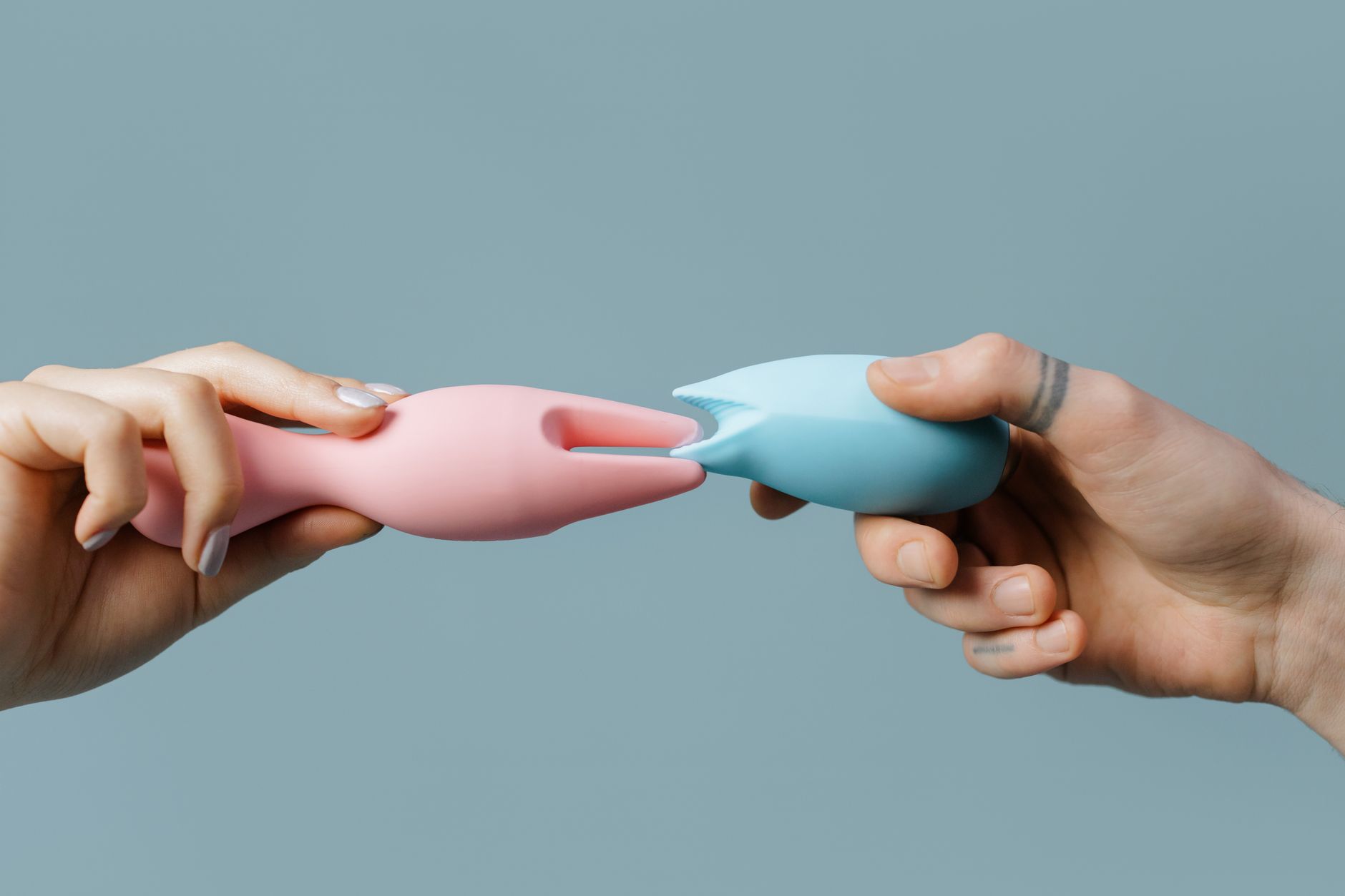
Lemon clitoral vibrators use suction and pulsation, not just vibration. That matters when your body is running on lower hormonal support.
Light vibration alone can feel underwhelming when sensitivity is muted. Suction-based stimulation like a lemon vibrator works differently. It creates sustained pressure and rhythm change that engages deeper nerve networks, not just surface sensation. You're getting physical input that doesn't rely as heavily on fine-tuned clitoral responsiveness.
In practical terms: a standard vibrator might feel "meh" on an IUD. A lemon vibrator often feels more direct, more substantial, more effective. The sensation isn't dependent on your body being in peak hormonal condition to register it.
How to adjust your technique with an IUD
Four shifts that make a real difference:
Start lower, build slower. Your arousal timeline has changed. Set a lemon vibrator to pattern 1 or 2 and spend 10 to 15 minutes at that level before increasing intensity. Your body isn't broken. It just needs more runway now.
Expect deeper engagement. Many people with IUDs report that lemon vibrators create more of a full-body response instead of a localized one. Some describe orgasms as less sharp but more integrated into the whole pelvic floor. That's not worse. It's different, and once you're used to it, often better.
Water-based lube is non-negotiable. Hormonal IUDs often reduce vaginal lubrication more than other contraceptives. A water-based lubricant makes suction feel smoother and prevents that awkward "dry suction" feeling that can happen with air-pulse devices. Apply generously and reapply halfway through.
Track the timing. Some people find their best sensation comes a few days before their next scheduled IUD check or during the brief window right after withdrawal bleeding (if they still bleed). This is worth noting. It might tell you if there's any residual monthly rhythm influencing your response, even with the IUD.
When sensitivity dips more than expected
If you inserted the IUD a few weeks ago and sensation feels significantly reduced, you're probably still in adjustment. Hormonal changes take 6 to 12 weeks to stabilize. Give it time.
But if three months in, sensation still feels off, a few conversations help:
Talk to your gynaecologist about switching IUD types. There are different hormonal IUDs (Mirena, Kyleena, Skyla) with varying hormone dosages. Some release more progestin, some less. If your current IUD is creating too much sensation dampening, a different model might match your body better.
Consider whether other factors are at play. Depression, relationship stress, and medication side effects all dull sensation independently. The IUD might not be the villain. But if the timing lines up perfectly with insertion, it's probably part of the picture.
Using lemon vibrators with reduced desire
One of the more frustrating IUD side effects is reduced spontaneous desire. You're not horny, the thought of sex doesn't randomly appear in your brain, and you have to actively choose to engage instead of responding to an impulse.
Honestly? This is where lemon vibrators shine. They're the quickest route from zero motivation to genuine sensation. Use one for two to three minutes at a moderate intensity. Your body often follows. You don't need to wait for desire to show up first. You can kind of... manufacture it, then let the physical response catch up.
This feels artificial at first. It's not. It's just learning that on an IUD, you might be an activator rather than a responder. That's a real pattern shift, and once you accept it, it's actually freeing. No more waiting for the mood to strike.
The orgasm texture question
Many people with hormonal IUDs report that orgasms feel qualitatively different. Not better or worse, but shifted. Some describe them as less peaked (no dramatic sharp release) and more wave-like. Others say they're more internal, less clitoral.
This varies wildly. But if you're noticing this, a lemon vibrator can help you explore it. Try different patterns and intensities to see which creates the sensation you prefer. Pattern 1 slow suction might feel meditative and full-body. Pattern 5 rapid might feel more like what you remember. You have options.
The point is not to fight the change. Work with it.
Checking in after IUD removal
If you ever remove the IUD, sensation often rebounds pretty quickly. Within a few weeks, you might notice arousal feels faster, desire feels more spontaneous, and clitoral sensitivity creeps back up. This is normal. Your body is re-adjusting to hormonal fluctuation again.
Some people find they still prefer lemon vibrators even after IUD removal, because they're used to the sensation and the rhythm. Others shift back to other tools. There's no rule. Your preference now is valid even if it changes later.
Patience is the real tool
The hardest part of using a hormonal IUD isn't the adjustment to sensation. It's resisting the urge to compare your current pleasure to your pre-IUD baseline and decide something is wrong. Something isn't wrong. Your body is just operating under different parameters. A lemon clitoral vibrator adjusts to those parameters faster than most tools because it's not relying on your body doing all the work. It's meeting you halfway. That's not a workaround. That's smart adaptation.
People also ask
Do hormonal IUDs permanently change sexual sensation?
No. Sensation shifts while the IUD is in place, but once you remove it, most people report that responsiveness bounces back within weeks. The change isn't permanent. It's a temporary recalibration that your nervous system fully reverses.
Can I use a lemon vibrator right after IUD insertion?
Yes, but wait 24 to 48 hours and use it gently. The first few days after insertion, your pelvic floor and cervix are tender. Start with low intensity and water-based lubricant, and listen to your body. If anything feels painful, stop and wait another week. Pain is different from discomfort. Pain means not yet.
Why do lemon sexual toys feel more effective on an IUD than vibrators?
Lemon vibrators use suction and pulsation patterns that engage deeper nerve networks instead of relying only on surface-level clitoral sensitivity. When hormonal IUDs reduce sensitivity, that deeper engagement often feels more substantial and more reliably pleasurable than vibration alone.
Will an IUD make me lose the ability to orgasm?
Very rarely. What's more common is that orgasms take longer to build, feel different in intensity or texture, or require more direct stimulation. The capacity is almost always still there. The pathway is just wider and less steep.
Should I remove my IUD if sexual sensation feels off?
Not immediately. Wait 12 weeks minimum. Hormonal adjustment takes time, and many people find sensation stabilizes into a new normal they actually prefer. Talk to your gynaecologist first. There might be other factors at play, or a different IUD might be a better fit for your body.
Is reduced desire on a hormonal IUD normal?
Yes. It's one of the most commonly reported side effects, and it's almost always reversible. Some people adjust and find their desire settles into a new baseline. Others find that directly stimulating with tools like lemon vibrators actually rebuilds motivation over time. Give it time and give yourself permission to change your approach.