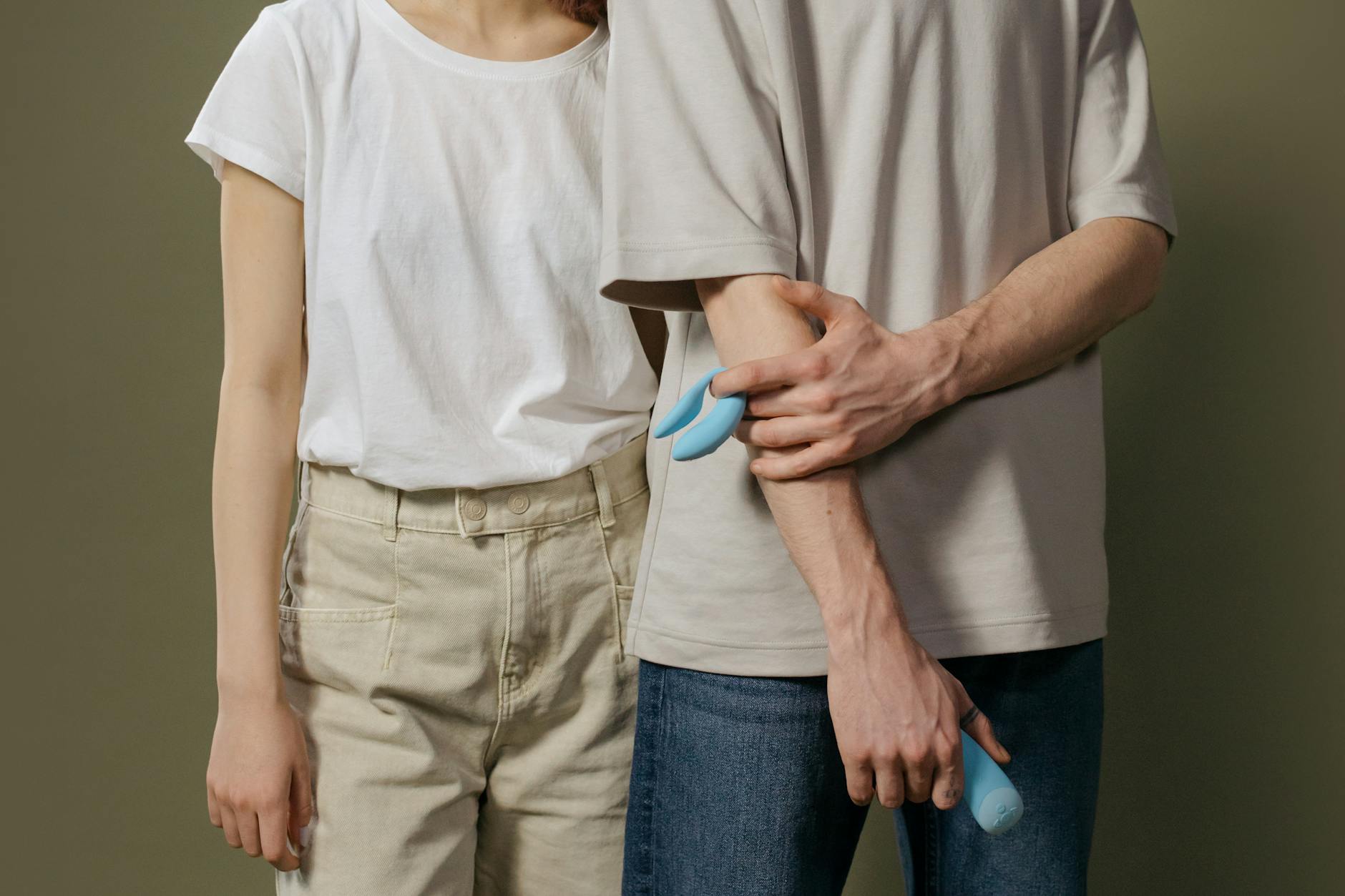
Pleasure doesn't disappear after a breakup. It just goes quiet.
After relationship loss, your body can feel like borrowed space. Whether the split was mutual, painful, or both, there's a particular kind of disconnection that sets in. You're not sure what your own desire looks like anymore when it's not tangled up with someone else's. Your nervous system has been trained to respond to a specific person, a specific touch, a specific rhythm. And now that's gone.
Here's the thing nobody talks about clearly: rebuilding solo pleasure after loss isn't just about physical sensation. It's about learning to trust your own arousal again, moving at your own pace, and deciding what feels good to you instead of what you thought you were supposed to want. This is where lemon clitoral vibrators become genuinely useful, not as a band-aid, but as a tool for intentional reconnection.
Why your pleasure system feels broken (it isn't)
When you lose a partner, your body loses its primary source of touch and arousal cues. That's not weakness. That's wiring. We're designed to sync with other people, and when that synchronization ends, your nervous system has to recalibrate. Desire can feel dormant for months. Arousal might take longer to build. Orgasms might feel different, or harder to reach, or absent entirely.
Many of my clients describe this as numbness, but it's really desensitization. Your body has been in a particular pattern of stimulation, and the sudden absence of that familiar touch can make everything feel muted. This is completely normal and completely temporary.
The nervous system is also doing something else after loss: it's protecting you. On some level, arousal feels like it belongs to the relationship that ended, so your body might suppress it as a form of grief. That's not broken. That's adaptive.
Why lemon vibrators work better for this than you'd expect
Lemon suction vibrators, like those in Hello Nancy's collection, work differently than traditional vibrators. Instead of just shaking back and forth, they create rhythmic suction that mimics the kind of sensation your body experiences naturally during arousal. For someone rebuilding pleasure after loss, this matters tremendously.
Here's why. Traditional vibrators require your body to already be somewhat aroused to feel good. If you're still in the numb phase, they can feel overwhelming or even irritating. Lemon clitoral vibrators create sensation without requiring you to be in a particular state first. You can start at the lowest setting and let the sensation gradually wake your body up. There's no judgment, no performance pressure, no partner waiting for you to feel ready.
The gentleness of suction also means you can explore your body without triggering the "this should feel a certain way" response that often comes after partner sex. A lem vibrator is just offering sensation. What you do with it is entirely yours.
Starting from zero: the first week back
If you're just beginning to explore solo pleasure again, here's what I typically recommend.
Start with no goal other than sensation. Not orgasm. Not intensity. Just feeling. Set aside 15 minutes when you won't be interrupted. No deadline. Lie down, get comfortable, and use a lemon vibrator at the lowest setting. Move it around your inner thigh, your outer labia, everywhere that isn't immediately the clitoris. Your body remembers what pleasure feels like, even if your brain is skeptical.
Don't rush to intensity. Stay with low patterns for at least the first week. You're not trying to force an orgasm. You're just reminding your nervous system that sensation exists and that you get to choose it. Many people feel almost nothing in the first session. That's fine. Come back the next day.
The lemon suction vibrators work particularly well for this slow restart because they give consistent, gentle sensation without the overwhelming buzz of traditional vibrators. It's like your body can believe it again without being shocked into it.
Rebuilding arousal when desire feels missing
The second phase is usually where people get confused. You're not numb anymore, but you're not automatically aroused either. Arousal has to be built now. It doesn't just happen.
After partner sex, your brain learned to respond to specific cues: your partner's touch, their presence, the anticipation of connection. Those cues are gone. Your body has to learn new pathways to arousal, and that takes intentional practice.
This is where the rhythm and consistency of a lemon clitoral vibrator becomes valuable. Use it the same way each time for a week or two. Same position, same setting, same time of day if you can. Your nervous system loves predictability. It will start to anticipate the sensation, and anticipation is the first step toward arousal.
Then vary one thing. Move the vibrator to a different area. Try a slightly higher setting. Change your position. Your brain learns through novelty, and each small variation creates a new neural pathway. Over time, these pathways stack up into something that feels like genuine desire again.
The emotional part (which is actually bigger than the physical part)
Some of the barrier to pleasure after loss isn't neurological. It's emotional. You might feel guilty for enjoying sensation without your ex. You might worry that solo pleasure is a betrayal or a step backward. You might feel ashamed that you're not immediately "better" or "over it."
This is where I stop being a therapist writing about vibrators and start being someone who's watched hundreds of people navigate this exact journey. Permission matters. You need to give yourself explicit permission to feel good again, separately from the relationship that ended. Not in spite of the loss, but as a separate act of care for yourself.
Using a lemon vibrator alone, on your terms, with no one watching or waiting, is one of the most straightforward ways to practice that permission. You're not performing. You're not meeting someone else's timeline. You're just choosing yourself.
Integrating sensation back into partnered sex (if that's next)
At some point, many people ask whether solo pleasure with a lemon vibrator will complicate things if they eventually have a new partner. The answer is almost always no.
In fact, getting really familiar with your own arousal system first makes partnered sex easier later, not harder. You know what settings work for you. You know how long you need to warm up. You know your patterns. You can actually tell a new partner what you like instead of defaulting to the old familiar rhythms with your ex.
If you do eventually share a lemon vibrator with a partner, you're both coming to it with less pressure. It's just a tool that feels good, not a substitute for anything or a statement about what you need. Some couples find that sharing a lem vibrator during partnered sex brings back the sense of collaborative pleasure that loss can make feel impossible.
How long does this usually take?
Rebuildng solo pleasure after loss isn't linear. Some people feel reconnected to their body within weeks. Others take months. And some find that their desire actually deepens over time as they learn to distinguish between the pleasure they shared with a partner and the pleasure they can give themselves.
I usually see the biggest shifts around the eight-week mark, when people have used a lemon clitoral vibrator consistently enough that it feels normal, not like a consolation prize. That's when the nervous system really starts to settle into a new pattern.
There's also often a moment where someone realizes they're exploring sensation without thinking about their ex at all. That moment is huge. It means your arousal system has found its own frequency again.
When to reach out for more support
If you're six months into rebuilding and still feel completely numb, or if the thought of pleasure triggers significant grief, it might be worth talking to someone. That's not weakness. That's good sense. Relationship loss is grief, and sometimes that grief needs more than solo tools.
A lemon vibrator is powerful, but it's not a replacement for processing the emotional weight of loss. It's a bridge back to your own body. The emotional work still needs to happen separately.
Pleasure is yours to rebuild
After relationship loss, your body doesn't forget how to feel good. It just temporarily loses the context it learned pleasure in. Lemon vibrators, with their gentle, consistent suction and their simplicity, offer a straightforward way to rebuild that context on your own terms. You're not trying to replicate what you had with a partner. You're discovering what you like when no one's watching but you.
That's actually the foundation for better partnered sex later, if that's what you want. But more importantly, it's the foundation for knowing yourself again.
People Also Ask
How long after a breakup should I start using a lemon vibrator?
There's no set timeline. If you're ready to explore sensation, you're ready. For most people, that's somewhere between two weeks and two months after a split, but some need longer and some are ready sooner. Listen to your body, not the calendar. If the thought of solo pleasure makes you feel more sad than curious, give yourself more time. When you're actually interested in exploring, that's the signal that you're ready.
Can using a lemon clitoral vibrator help me move on faster?
Not faster, but more completely. Reconnecting with your own pleasure is part of the psychological work of moving on. It reminds your nervous system that you're not defined by the partnership, and that your capacity for good sensation doesn't disappear when the relationship does. That's different from "healing faster." It's more like "healing more thoroughly."
Will a lem vibrator feel weird if I've never used one before?
Most people find it less weird than they expected. The suction sensation is gentler than traditional vibration, so it doesn't feel shocking to a body that's been disconnected from pleasure. Start at the lowest setting and give yourself permission to take it slow. Weird often just means unfamiliar. After a few sessions, it becomes normal.
Is it normal to not feel much the first time?
Completely normal. If you've been numb, your nerve endings have been quiet. It can take a few sessions for sensation to register as "good" rather than just "different." Come back the next day, or the day after. Consistency builds sensation. Your body will wake up.
Should I tell a future partner I'm using a lemon vibrator?
That's your choice. Some people find it natural to mention it as part of sharing what they like. Others keep it to themselves. There's no rule. What matters is that you're using it for you, not hiding it out of shame. If you eventually want to use it with a partner, how to introduce a lemon vibrator to a reluctant partner covers that conversation clearly.
Does using a lemon vibrator alone mean I don't want partnered sex anymore?
No. Solo pleasure and partnered pleasure are completely different experiences. Solo use is about reconnecting with yourself. Partnered sex, when you're ready, is about connection with someone else. You can want both. Most people do.
The path forward
Rebuildling pleasure after relationship loss is an act of self-care that nobody talks about directly enough. A lemon vibrator is just a tool. But it's a tool that says: your pleasure matters, separate from anyone else's presence or approval. That message, repeated consistently, is what actually changes things.