Here's what nobody tells you about your clitoris
Your clitoris isn't just the visible bump. It's an iceberg. The external part you see is maybe 25% of the total structure. The rest fans out internally in two wings, called the clitoral crura, that run toward your hip bones. That whole system is wired with roughly 8,000 nerve endings, all concentrated in an area smaller than your fingernail. To put it in perspective, the entire penis has about 4,000.
Why does this matter? Because how a lemon vibrator stimulates you depends almost entirely on which nerve endings it's hitting and how much pressure you're comfortable with.
The anatomy of a sensitive clitoris
Clitoral sensitivity isn't one thing. It's actually three overlapping systems working at different thresholds.
The surface layer consists of super-responsive nerve endings right at the surface of the glans, the visible tip. These nerves fire quickly and intensely. For some people, direct vibration on these nerves feels amazing. For others, it's overwhelming or even uncomfortable. This is why some people can't stand direct contact but love what happens when a lemon vibrator creates gentle suction around the area.
The deeper internal system runs through the clitoral body and those wings we mentioned. These nerves respond to pressure and broader stimulation. They take longer to activate but can build into deeper, more full-body sensation. Lemon vibrators access this layer brilliantly because suction pulls tissue into the cup, stimulating nerves further inside without harsh direct friction.
The connective system is your pelvic floor muscles, which are wired to contract during arousal and orgasm. Tension or weakness here changes how much sensation you actually feel, even if the nerve endings are firing perfectly. This is why pelvic floor health matters as much as the toy itself.
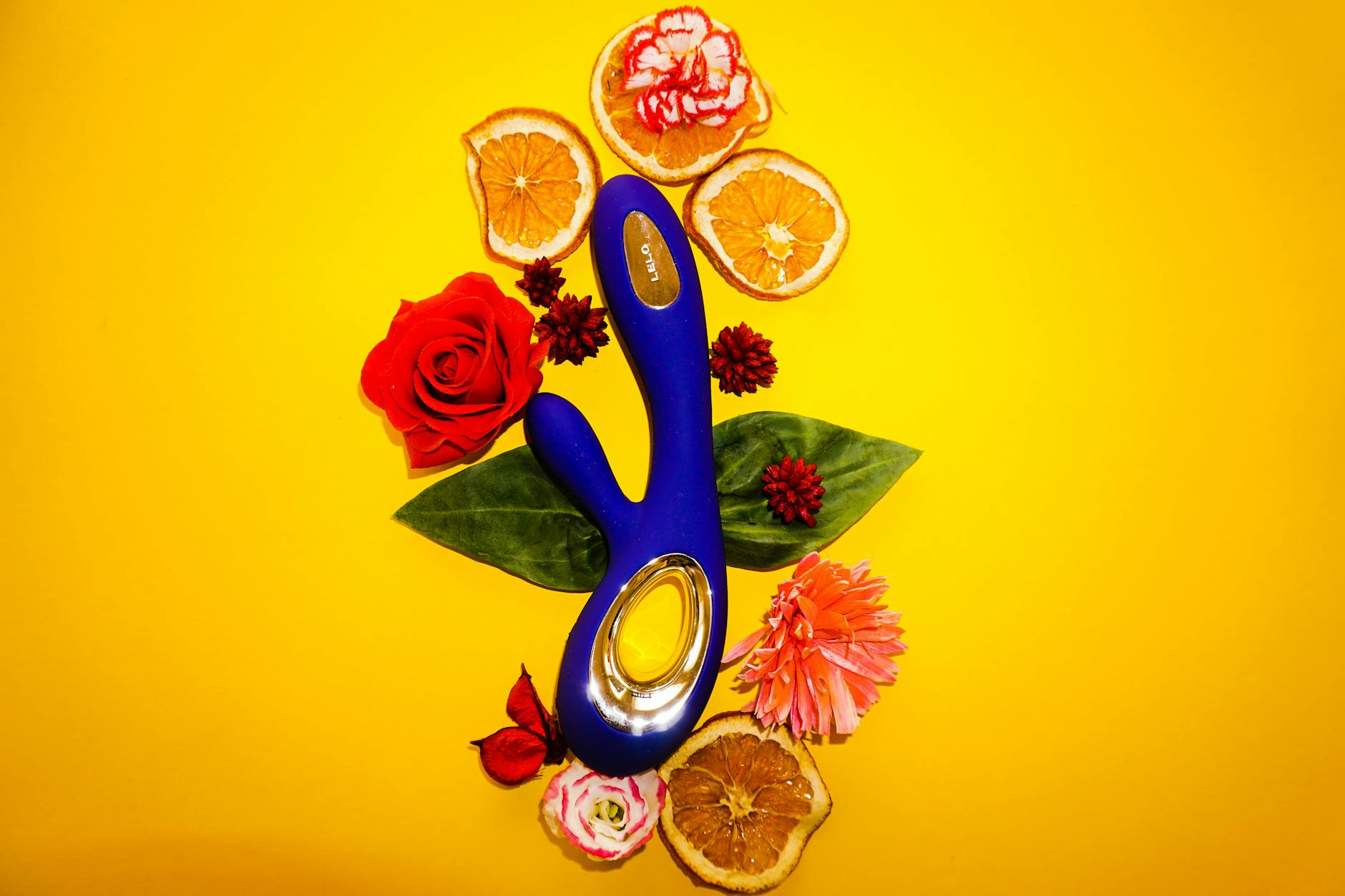
Photo by FounderTips on Pexels
Why lemon vibrators feel different on sensitive tissue
Most vibrators create stimulation through rapid side-to-side or up-and-down motion. This works well for people with lower sensitivity or tougher external tissue. But for sensitive clitorises, that constant hammering can feel painful or numbing after a few minutes.
Lemon suction vibrators, by contrast, use gentle pulsing air waves to create a rhythm that mimics oral sex. The cup creates a seal around the clitoris, then releases and reseals in patterns. This means the stimulation is:
- Non-contact in key moments. The suction releases between pulses, giving nerves a microsecond to reset. This prevents the overstimulation that happens with constant vibration.
- Diffused across a larger area. Instead of a single vibrating point hitting the same 100 square millimeters of skin, suction spreads stimulation across the whole glans and some of the internal structure.
- Pressure-based rather than friction-based. Suction engages the deeper nerve endings without the surface-level burn of direct vibration.
For a sensitive clitoris, this matters enormously. You get intensity without the pain, and depth without numbing.
How intensity settings actually work
Here's where most people get lost with clitoral vibrators. When a toy says "10 settings" or "12 intensity levels," what's actually changing?
For lemon vibrators specifically, intensity changes the strength and speed of the suction rhythm. On the lowest settings, the pulses are gentler and further apart. Your nervous system has time to process each wave. The clitoris doesn't become desensitized.
As you move up in intensity, the pulses get stronger and closer together. The suction becomes more insistent. This is where sensitivity matters. If you start at level 8 on a sensitive clitoris, you're essentially forcing 8,000 concentrated nerve endings to fire rapidly without adequate recovery time. Predictably, that either feels incredible for about 90 seconds before going numb, or it feels painful immediately.
Starting at level 1 or 2 with a sensitive clitoris is not a limitation. It's the correct technique. You're allowing arousal to build gradually, letting blood flow increase, and giving your body permission to sensitize the tissue rather than desensitize it. Many people find their most intense orgasms happen when they spend 15-20 minutes building from level 2 to level 5, rather than jumping to level 7 and staying there.
The sweet spot for sensitive clitorises tends to be levels 3-6. Below that, you might feel like you're not getting enough sensation. Above that, you risk overstimulation or numbness.
The role of arousal timing
Here's something that changes everything: your clitoral sensitivity literally shifts based on your arousal level.
When you're just starting out, your clitoris is relatively retracted and less responsive. Touching it directly can feel pointless or uncomfortable. But as arousal builds over several minutes, blood rushes into the tissue, it engorges slightly, and the nerve endings become dramatically more sensitive and more capable of intense pleasure.
This is why jumping straight to a lemon vibrator without adequate foreplay often disappoints. Your clitoris isn't actually ready for stimulation yet. You're asking it to perform before it's awake.
If you tend to have a sensitive clitoris, budget 5-10 minutes of mental foreplay, fantasizing, or light touching before introducing a vibrator at all. Then start the vibrator on its lowest setting. You'll likely find that by the time you're genuinely turned on, level 3 or 4 feels perfect instead of overwhelming.
Why some days feel different than others
Clitoral sensitivity fluctuates with your menstrual cycle, stress, sleep, hydration, and hormones. Depending on where you are in your cycle, the exact same lemon vibrator setting can feel gentle one day and intense the next.
Right before and during your period, many people with vulvas experience heightened clitoral sensitivity. Estrogen is dropping, and the tissues become more reactive. This is the week where you might drop two intensity levels from your usual baseline and still get incredible sensation.
Mid-cycle around ovulation, when testosterone peaks slightly, you might find you want more intensity than usual.
Stress, poor sleep, and dehydration also tank clitoral sensitivity. You'll need more stimulation to achieve the same feeling. None of this is a problem. It just means adjusting your approach based on how your body is actually showing up that day, not what worked last Tuesday.
Building tolerance versus building capacity
One concern I hear from people with sensitive clitorises: "If I use a lemon vibrator regularly, won't I build tolerance and need more stimulation?"
The answer is nuanced. You don't build tolerance to pleasure the way you build tolerance to a medication. What you build is capacity. Your nervous system becomes more skilled at processing intense sensation. You become less easily overwhelmed, not numb.
Some people find their sensitivity actually improves with regular use of a quality lemon vibrator, because they're giving themselves permission to feel pleasure consistently. This rewires your nervous system to trust sensation instead of bracing against it.
Others find that having a vibrator they can use comfortably means they explore more patterns, more positions, and more contexts. They're not using the same toy the same way every time. Variation prevents desensitization far more effectively than abstinence does.
The real risk is overuse without variation. If you use maximum intensity every single day, yes, your clitoris will become less responsive. But that's a use problem, not a sensitivity problem. The solution is having other tools in your drawer: different lemon vibrators with different patterns, hands, partnered touch, or periods of rest.
The lubricant factor you're probably ignoring
Most people think lube is optional. For sensitive clitorises, it's foundational.
Water-based lube does two things. First, it allows the lemon vibrator cup to create a seal more easily, which means gentler suction is more effective. Second, it reduces micro-friction that can feel irritating on sensitive tissue.
Without lube, you might need to jump to intensity level 5 to feel anything because the cup isn't sealing properly and you're mostly feeling friction instead of suction. With a small amount of water-based lube around the opening of the cup, level 2 suddenly delivers the sensation you were chasing.
This is one of the easiest leverage points. If you have a sensitive clitoris and you've written off lemon vibrators as too intense, try again with lube first.
Positioning changes everything
Clitoral sensitivity also depends heavily on how directly you're approaching the area. Straight-on, direct contact through the center? That's the most intense approach, and it's often too much for sensitive clitorises.
Angled approach from the side? Far gentler. Your clitoris is a complex organ, not a button. Coming at it from the side engages different parts of the glans and the internal wings, spreading the stimulation more widely.
You can also experiment with positioning your body. Some people find that slightly adjusting hip angle or using a pillow changes which nerve endings the lemon vibrator primarily hits. Small shifts make significant differences in comfort and sensation.
When to see someone about extreme sensitivity
If touching your clitoris at all causes sharp pain, not just discomfort, that's worth mentioning to a gynecologist. Clitoral pain is real and treatable. It's not a personality type. It can be related to dermatological conditions, pelvic floor dysfunction, neuropathy, or past trauma.
A pelvic floor physical therapist or trauma-informed sex educator can also help. They can teach you desensitization techniques if you want to become more comfortable with sensation, or help you find pleasure paths that don't require clitoral touch at all.
FAQ: Your questions about sensitive clitorises and lemon vibrators
Can I use a lemon vibrator if my clitoris is too sensitive to touch?
Often, yes. The reason direct touch feels too intense is usually that you need foreplay, lube, and indirect approach first. A lemon vibrator on its lowest setting, applied to the side of the clitoris rather than dead-center, with plenty of lube, feels wildly different than direct finger contact. If even that hurts, talk to a healthcare provider. You might have vaginismus, a skin condition, or pelvic floor tension that needs specific attention.
How do I know if I'm on the right intensity level?
You should feel pleasure, not pain or numbness. Pleasure has a distinctive quality: it builds, it feels good in real time, and it creates a sense of wanting more. Numbness feels like you're chasing sensation that isn't there. Pain feels sharp or burning. If you're unsure whether you're numb, wait 30 seconds at your current level. Do you want to move to a higher intensity, or does lower sound better? That instinct usually tells you what you need.
Do I have to start at level 1 every single time?
No. Once you know your body, you can jump to level 2 or 3 if that's your usual baseline. But if you're feeling low-energy, stressed, or haven't had much foreplay, dial it back a level from your normal. Your clitoris will thank you.
Why does my clitoris feel less sensitive after an orgasm?
After orgasm, your nervous system essentially resets. The tissue is temporarily less reactive because the blood has drained and the nerves have fired intensely. Some people want continued stimulation through this phase. Others find it unbearable. Both are normal. If you want multiple orgasms, you might need a 30-90 second pause before resuming, or you might prefer switching to a lower intensity for the second round.
Can I use a lemon vibrator if I'm on antidepressants that affect sensitivity?
Absolutely. How Lemon Vibrators Boost Pleasure When You're Taking New Medications is worth reading for context, but the short answer is yes. You might need lower intensity or longer foreplay, but you can absolutely experience pleasure and orgasm. Many people find that a tool like a lemon vibrator that works specifically with their body's current capacity is more helpful than waiting for medication side effects to fade.
Is it normal for my clitoris to feel more sensitive on certain days of my cycle?
Completely normal. Clitoral sensitivity shifts with your cycle because hormone levels change. You might feel more responsive mid-cycle and less sensitive during your period or before. This is exactly why paying attention to how your body feels each day, rather than assuming one intensity level always works, matters so much.
Can a lemon vibrator actually help a numb clitoris feel more sensation?
Sometimes, yes. How to Use a Lemon Vibrator for Better Pleasure When Your Clitoris Feels Numb covers this in detail. The suction-based approach of lemon vibrators can sometimes wake up nerves that direct vibration numbed out. That said, persistent clitoral numbness is worth discussing with a healthcare provider, especially if it came on suddenly. It can signal medication side effects, circulation issues, or nerve compression.
The bottom line
Sensitivity isn't something you need to fix or work around. It's information about how your nervous system is wired right now, in this moment, in your cycle, under your current stress levels. A lemon vibrator is a tool that works brilliantly with sensitive clitorises precisely because it uses suction instead of direct vibration. Start low, use lube, take your time with foreplay, and trust what feels good. Your clitoris knows exactly what it needs.