
When sensation goes quiet
Reduced clitoral sensitivity is wildly common and almost never permanent. It's also almost never what you think it is. Most people blame aging or assume they've just "used up" their nerve endings. Neither is accurate. What's actually happening is more fixable, and way more interesting.
I've worked with hundreds of couples navigating this shift, and the pattern is always the same: confusion, then shame, then acceptance of a false narrative ("this is just how bodies age"). But the research tells a different story. Your clitoris has the same nerve density it always did. Something upstream has changed.
Why sensitivity actually decreases
Here are the real culprits, ranked by frequency I see in my practice.
Stress and cortisol. The most underrated factor. High sustained stress literally dampens nerve sensitivity in the pelvic region. Your nervous system prioritizes threat response over pleasure response. It's not a choice or a character flaw. It's neurobiology. This one reverses fastest once stress load drops.
Medications. SSRIs, blood pressure meds, antihistamines, and even some birth control formulations can blunt sensation. The frustrating part: your doctor might not connect the dots between your medication and your pleasure unless you ask directly. Switching timing, dose, or class of medication sometimes helps dramatically.
Hormonal shifts. Not just menopause. Postpartum testosterone dips, thyroid dysfunction, and even vitamin D deficiency can reduce clitoral responsiveness. This one requires bloodwork to diagnose properly.
Desensitization from repetitive stimulus. If you've been using the same vibrator at the same intensity for years, your nerve endings stop firing as enthusiastically. It's habituation, not damage. Changing the type of stimulation almost always fixes it.
Pelvic floor tension. A tight pelvic floor restricts blood flow to the clitoris, which means less engorgement and less sensation. Most people think Kegels are the answer. Kegels can actually make this worse if your floor is already tense. Breathing and relaxation come first.
How lemon vibrators work differently
Air-suction technology is not like traditional vibration. A lemon clitoral vibrator uses gentle pressure waves instead of oscillating motion. Here's why that matters for sensitivity:
It stimulates without irritation. Traditional vibrators can feel numb or even slightly painful when tissue sensitivity is low because vibration creates friction. Air suction engages a totally different set of nerve receptors. It's gentler on already-depleted nerves while still triggering strong responses.
It encourages blood flow directly. The suction action pulls blood into the clitoral tissue, which is literally what creates sensation. You're not just stimulating what's already there. You're restoring the physiology that supports feeling.
It feels more intuitive. Most people describe air-suction as closer to the sensation of oral sex than to a vibrator. If your clitoris has been unresponsive to traditional vibrators, the novelty of a different sensation pattern alone can wake things back up.
The intensity builds gradually. With a lemon sucker, you can start at barely-there pressure and work your way up. Your nerves reawaken in stages instead of being shocked into numbness. That progression is where real sensation returns.
The reset protocol: using your lemon vibrator strategically
If reduced sensitivity is your situation, this approach works better than jumping straight to full intensity.
Days 1-3: Pattern 1, no more than 10 minutes. Start at the lowest setting on your lemon vibrator. You're not looking for orgasm. You're introducing your clitoris to a new sensation type and letting your nervous system register that pleasure is safe again. Your brain needs to update its map of what's possible.
Days 4-7: Explore patterns 1-3, 10-15 minutes. Now that the basic signal is working, introduce variation. Switch between patterns every 2-3 minutes. Your nerve endings are like muscles: they need varied stimulus to rebuild responsiveness.
Week 2+: Add duration and intensity gradually. Once you're comfortable with patterns 1-3, move to pattern 4. Extend session time by 2-3 minutes. The key is "gradually." Pushing too hard too fast tricks your body into the same habituation loop you're trying to break.
Include arousal work first. Don't pick up the lemon vibrator cold. Spend 10-15 minutes reading erotica, watching something you like, fantasizing, or having your partner touch you elsewhere. Arousal increases clitoral blood flow and nerve sensitivity. You're not fighting against your body; you're working with it.
What to do if numbness returns
Habituation can happen again even with air-suction, especially if you're using the same device daily for months. This is actually good news because the fix is simple.
Rotate stimulation types. Pair your lemon vibrator with manual touch, partnered touch, or a different category of toy. Your nervous system adapts to monotony fast. Variety keeps things fresh.
Take breaks. I tell my clients: if you're using any vibrator more than 4-5 times a week consistently, take a week off every 4-6 weeks. Your clitoris resets its sensitivity baseline. You'll come back to it more responsive than before.
Switch intensity levels mid-session. Instead of staying on pattern 4, drop back to pattern 2 for a minute, then ramp back up. The contrast creates novelty and resets nerve fatigue.
Connect the physical to the emotional. Sometimes reduced sensation is actually your body's way of telling you something deeper is off. If stress, relationship friction, or body disconnection is the root cause, your clitoris won't fully reawaken until that piece shifts. This is worth examining honestly, maybe with a partner or therapist.
When medication is the cause
If your sensitivity dropped after starting a new medication, talk to your prescriber. Don't stop taking it on your own, but do mention the symptom. Options include timing shifts (taking it at night instead of morning), dose adjustments, or switching to an alternative medication in the same class with fewer sexual side effects.
SSRIs are notorious for this. Switching from sertraline to bupropion sometimes solves it. Adding a small dose of wellbutrin to an existing SSRI can counteract the blunting effect. These conversations feel awkward, but your doctor has had them hundreds of times.
Partnered sensitivity recovery
If you have a partner, this is a great opportunity to rebuild intimacy intentionally. Here's what I recommend:
Tell them what you're doing and why. Reduced sensation can feel like rejection to a partner if they don't understand the neurobiology. Reframe it: "My body is resetting how it experiences pleasure. I need slower, varied touch. Want to explore that together?"
Take the lemon vibrator into partnered sessions. Your partner can hold it while you guide intensity. They can learn what pattern and timing makes you respond. There's something deeply connecting about that kind of deliberate, collaborative pleasure rebuilding.
Stay off performance pressure. The goal is not orgasm. The goal is sensation. That distinction frees both of you from the anxiety that kills arousal.
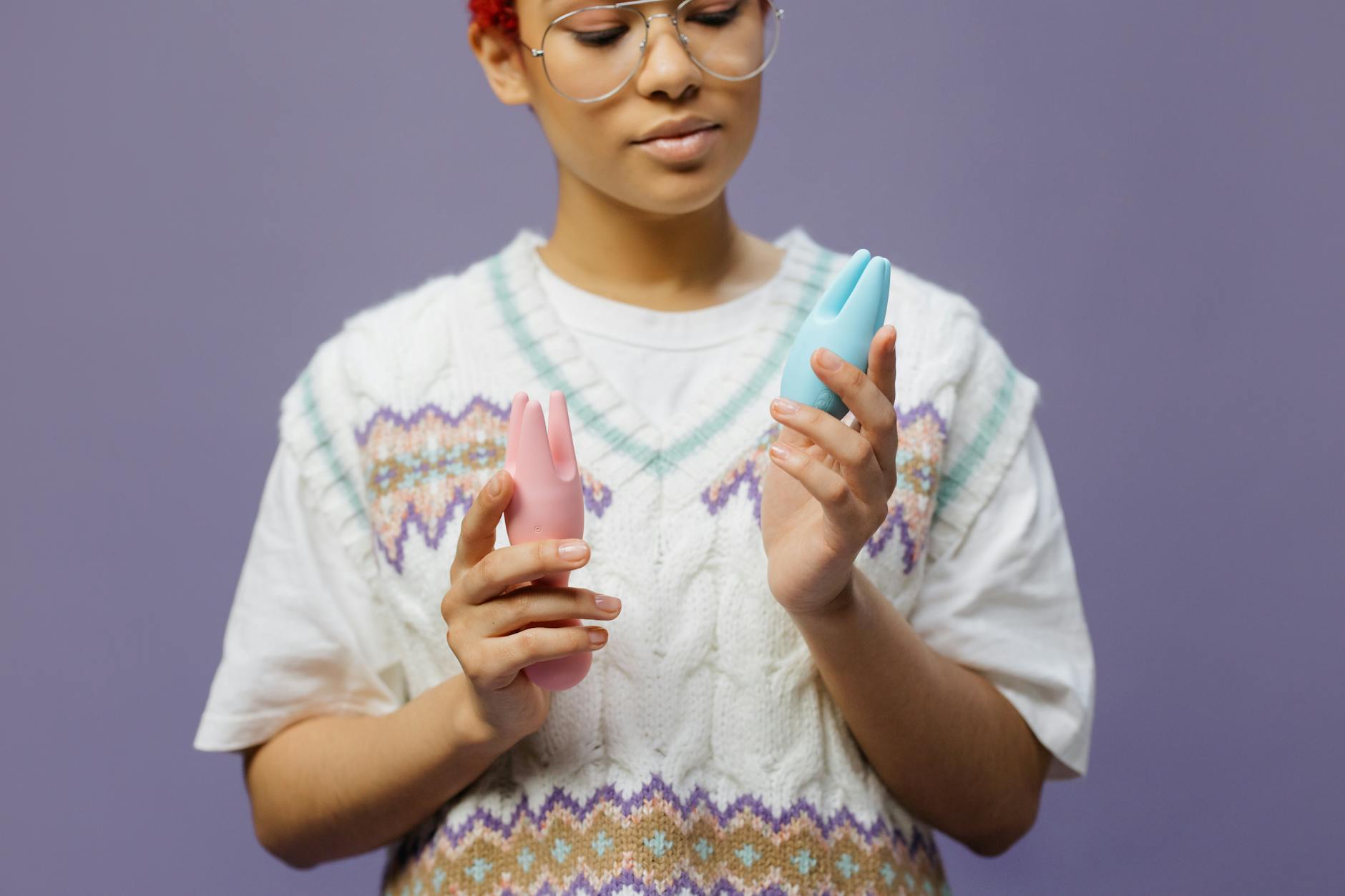
Photo by cottonbro studio on Pexels
The timeline for real change
Most people report noticeable improvement in clitoral responsiveness within 2-3 weeks of consistent use. Real, sustained sensitivity recovery takes 6-8 weeks. This lines up with what we know about nerve plasticity and nervous system retraining. Your body isn't broken. It's just recalibrating.
If you're not seeing improvement after 8 weeks, the cause might be medical (thyroid, testosterone, nutritional deficiency) rather than behavioral. That's when bloodwork and a conversation with a gynecologist or functional medicine provider makes sense.
FAQ: Reduced clitoral sensitivity and lemon vibrators
Can reduced clitoral sensitivity be permanent?
Very rarely. The clitoris has roughly 8,000 nerve endings and doesn't lose them with age or use. What changes is neural responsiveness, which is fully reversible. I've worked with women in their 70s who recovered full sensation after addressing underlying stress or medication effects. Permanent loss happens almost exclusively with specific nerve damage, which is uncommon.
Is it normal for sensitivity to decrease after years of using the same vibrator?
Completely normal. Your nerve endings habituate to repetitive stimuli. It's the same reason a familiar song stops feeling as impactful. Switching to a different stimulation type, like a lemon clitoral vibrator, resets that habituation fast. Different sensation patterns activate different nerve clusters.
Can stress alone cause this, or is it always medical?
Stress alone can absolutely cause it. Chronic elevated cortisol literally dampens nerve sensitivity in the pelvic region. I've seen women recover 80% of their baseline sensitivity just through stress management, meditation, and rest. That said, it's worth getting basic bloodwork done to rule out thyroid, vitamin D, and hormone levels. Most of the time it's stress plus one other factor.
Should I use the highest pattern on my lemon vibrator to rebuild sensitivity?
No. Start low and work up slowly. Using high intensity to try to "shock" the clitoris back into sensitivity usually backfires and triggers the same numbness pattern again. Your nervous system needs gradual retraining, not aggressive stimulus. Patience wins here.
How often should I use a lemon vibrator if I'm dealing with sensitivity loss?
Starting out, 3-4 times per week is ideal. This gives your nervous system time to process and adapt between sessions. Once sensitivity returns, you can increase frequency. But if numbness ever creeps back in, pull back to 3-4 times per week again. Consistency beats intensity.
Can my partner's touch help restore sensitivity, or do I need the vibrator?
Both help, but they work differently. Your partner's hands provide warmth, pressure variation, and emotional connection. A lemon vibrator provides consistent, precise stimulation and blood flow engagement. For sensitivity recovery, combining them is most effective. Use the vibrator for dedicated sessions, and ask your partner for slower, varied manual touch on other occasions. Your clitoris benefits from different input types.
The reset takes time, but it works
Reduced clitoral sensitivity feels like loss. I want to be clear: it's not. It's your nervous system asking for attention, usually from stress, sometimes from medication, occasionally from a physical shift. All of those are addressable. A lemon vibrator isn't a magic fix, but it is a smart tool because it retrains sensitivity in a way traditional vibration doesn't. Combined with stress reduction, rest, and honest conversations with your partner and doctor, you can wake your clitoris back up. Most people do. You will too.
If you're ready to start, take the pressure off and start small. Your body remembers how to feel. You're just helping it remember.