
Let's name what's actually happening
You and your partner aren't broken. Life just got loud. Work deadlines, aging parents, kids, financial worry, home repairs, illness. Any one of those would tank desire. All of them stacked together? That's not a relationship crisis. That's survival mode.
The good news: desire doesn't disappear when stress piles on. It goes dormant. Which means it can wake back up. But rewiring connection after months or years of stress requires a different approach than jumping back into sex the old way.
This is where a lemon vibrator changes everything.
Why stress kills intimacy (the actual mechanism)
Here's the biological fact nobody tells couples: chronic stress floods your nervous system with cortisol and adrenaline, which directly suppress the parasympathetic response needed for arousal. Your brain is literally in threat-detection mode. Wanting sex feels impossible because neurologically, your body is saying "this is not the time."
Part of that response is self-protective. And part of it is just momentum. After months of not touching, the neural pathways for desire actually weaken. Not permanently. Just rusty. You lose the habit.
The other layer is emotional. When stress is relentless, partners often stop talking about anything that isn't logistical. You become co-managers of crisis instead of companions. Intimacy requires vulnerability, and vulnerability feels risky when you're already overwhelmed.
Why a lemon vibrator is the right bridge tool
I recommend air-suction clitoral vibrators like the Mylem lemon vibrator specifically for couples rebuilding after stress because they work with what your body is actually doing instead of against it.
When arousal is rusty, friction-based stimulation often feels either too intense or requires way too long to build intensity. A lemon clitoral vibrator uses gentle suction that builds sensation without the pressure, which means your nervous system doesn't have to work so hard to shift into arousal mode. You get there faster. That matters when confidence is low.
Second, suction activates different neural pathways than vibration alone. It's novel. After months of not having sex, novel feels like permission to try something new instead of forcing yourself back into old patterns that stopped working.
Third, a lemon vibrator is a neutral third object. When couples are rebuilding intimacy after stress, there's often shame or resentment baked in. "I wanted sex and you didn't." "You're always tired." A vibrator depersonalizes that dynamic. It's not about her wanting something he can't give. It's about both of them using a tool together to find arousal.
How to actually start using it together
The mistake most couples make is trying to recreate foreplay from before the stress hit. You can't. Your bodies have been in neutral for too long. Here's a better framework.
Step one: use it solo first, together. This sounds counterintuitive, but separate arousal is easier than coordinated arousal when you're starting over. You each explore what feels good on your body with the lemon vibrator while the other person is present but not performing. You're not trying to turn each other on. You're just remembering what arousal feels like. This takes the pressure off. You get to rediscover pleasure without an audience expecting you to perform.
Step two: build in breathing and slowing down. After stress, bodies are tight. Shoulders up, breathing shallow. Before touching with the lemon vibrator, spend three to five minutes just lying together with eyes closed, doing synchronized breathing. In for four, hold for two, out for six. This literally shifts your nervous system into parasympathetic mode. Then introduce the vibrator.
Step three: start with settings one through three. The highest settings on a lemon clitoral vibrator can feel overwhelming if you haven't had consistent arousal in a while. Low intensity lets your nerve endings wake up gradually. You build intensity as tolerance returns.
Step four: make it about curiosity, not goals. The fastest way to kill desire again is to put pressure on orgasm. After stress, just getting aroused is the win. Using a lemon vibrator together and feeling sensation come back without that meaning anything else has happened? That's success. You can add partnered touch later.
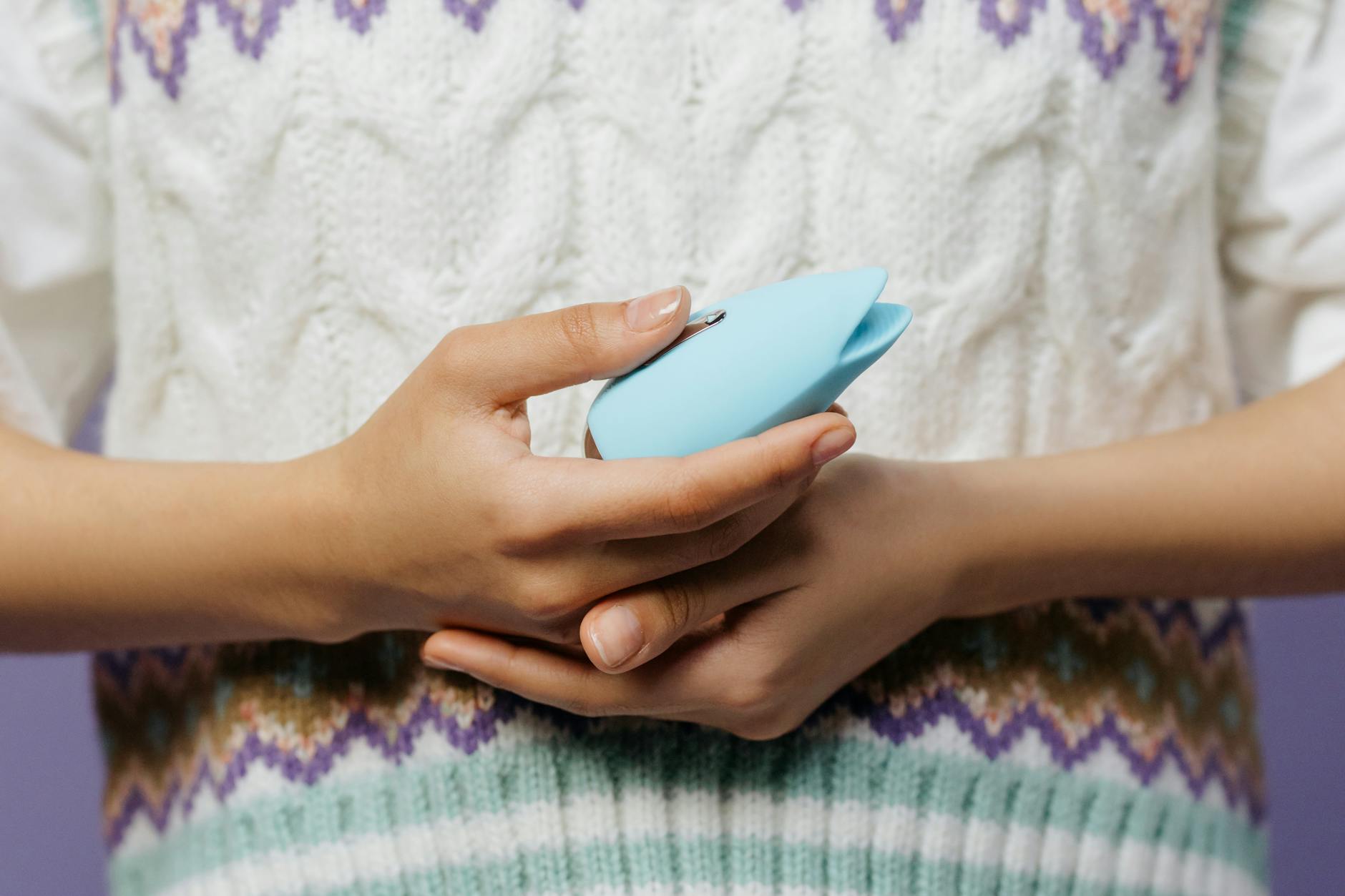
Photo by cottonbro studio on Pexels
The conversation you need to have first
Don't just introduce a lemon vibrator without talking. That triggers defensiveness or shame. Instead, frame it like this:
"I miss being close to you. I know we've both been overwhelmed. I'm not blaming either of us. But I want to rebuild this and I think we need a different approach than what we had before. Would you be open to trying something together that might make it easier to reconnect?"
Then listen. If your partner feels resentful, name it. "I know there's frustration here." If they're worried it means something's wrong, clarify. "It means I want us to feel good again and I want to meet you where you actually are right now, not where we were."
A lemon vibrator isn't a fix for a broken relationship. But it is a practical tool that signals to your nervous system "this is safe, this is for pleasure, this is allowed right now." After stress, that signal matters.
Timing and frequency that actually works
Don't try to rebuild intimacy during the week when stress is still active. Pick a weekend morning or an afternoon where you both have actual rest, not just absence of obligations.
Frequency matters less than consistency. Once a week using the lemon vibrator together while your nervous systems are calm is better than three times a week while you're both stressed. Your body will start anticipating the experience and arousal becomes easier each time.
Set a boundary on timing too. Fifteen to twenty minutes is enough. You're not trying to replicate two-hour sessions from years ago. You're rebuilding the habit.
When to add partnered touch
After two to three weeks of using a lemon clitoral vibrator together and rediscovering solo arousal, you can start reintroducing partnered touch. But start small. Hands on shoulders. Kissing. Touching the other person while they use the vibrator, not instead of it. Let the tool do the heavy lifting while your partner's hands and presence add emotional connection.
Most couples find that within four to six weeks of consistent practice, the neural pathways for desire start firing again. Sex becomes possible without forcing it. Touching your partner stops feeling like an obligation.
What happens after you've rebuilt
Some couples find they want to keep using a lemon vibrator as part of their regular practice because it just feels good. That's fine. There's no graduation requirement. Some find they revert to partnered sex and rarely reach for it again. Both are normal.
The point isn't the tool. The point is that life stress doesn't have to permanently tank your sex life or your emotional intimacy. It just needs a different pathway back.
Frequently asked questions
How long does it actually take to rebuild desire after months of stress?
Neural rewiring usually takes four to eight weeks of consistent practice. But you'll feel shifts earlier. Most couples notice they're thinking about each other's bodies again by week two. Actual arousal returning usually shows up by week three or four.
My partner thinks using a vibrator means there's something wrong with them
This is worth a separate conversation. A lemon vibrator is a tool, not a referendum on your partner's adequacy. You might frame it as "this is for us, not for me" or even try it together the first few times so it doesn't feel like you're leaving them out. If the shame doesn't lift, that might point to a bigger conversation about self-worth that a therapist could help with.
Can we use a lemon vibrator if we've never used one before
Yes. Actually, couples rebuilding intimacy after stress are often the best candidates for starting with a clitoral vibrator because you need something that works efficiently. You don't have the luxury of a long exploratory phase. A lemon vibrator gets you to arousal faster, which builds momentum and confidence.
What if only one of us wants to rebuild right now
Then you have a different problem than stress. You might have a mismatch in desire that needs individual work or couples counseling. A lemon vibrator can't fix ambivalence about the relationship. It can only help when both people want reconnection but don't know how to get there.
Is it normal that we still feel awkward even with the vibrator
Completely normal. Awkwardness fades with repetition. After months of disconnection, bodies feel unfamiliar. You're relearning each other. The vibrator is just a container for that process. The awkwardness usually dissolves by week three or four when you've done it enough times that it feels routine instead of weird.
Should we add other toys or just stick with the lemon vibrator
Stick with one tool while rebuilding. Too many options muddy the process. You want to know that the lemon vibrator specifically is what's working so you understand what to reach for. After you've rebuilt regular intimacy, you can experiment more if you want.
The actual path forward
Stress doesn't kill your relationship or your sexuality. It just pauses both. Using a lemon clitoral vibrator together isn't a substitute for the deeper work of managing stress or addressing relationship patterns. But it is a concrete, practical step that signals safety to your nervous system and creates momentum toward reconnection.
Your body remembers how to feel pleasure. Your relationship remembers how to be intimate. They just need permission and the right conditions to wake back up. Start with consistent, low-pressure practice. Use tools that work with your current reality instead of against it. Show up for each other with curiosity instead of performance pressure. That's the whole protocol.
Rebuilding takes time. But it works. If you need support navigating the emotional dimensions of reconnection after stress, reach out to discuss what might help.
Sources
Gottman, J. M., & Silver, N. (2015). The seven principles for making marriage work: A practical guide from the country's foremost relationship expert. Harmony.
Perel, E. (2018). Mating in captivity: Unlocking erotic intelligence. Harper Perennial.
Nagoski, E. (2015). Come as you are: The surprising new science that will transform your sex life. Simon & Schuster.
Van der Kolk, B. (2014). The body keeps the score: Brain, mind, and body in the healing of trauma. Viking.