How stress actually kills your sex drive
Let's be real. When your relationship has weathered years of conflict, financial pressure, parenting chaos, or unresolved hurt, your body doesn't suddenly flip back into arousal mode just because the crisis passes. Your nervous system is still in lockdown. That's not laziness or lack of love. That's neurobiology.
When you're in chronic stress, your body lives in sympathetic nervous system activation. Your amygdala is hypervigilant. Cortisol is circulating. The last thing your brain does is allocate energy toward pleasure. Sex feels like one more task on an impossible list. Or worse, it feels like a performance you're not sure you can deliver.
The physical stuff matters too. Stress tightens the pelvic floor, narrows blood vessels, and suppresses the hormones that build desire. Many couples I work with report that even touching feels foreign after months or years of conflict. Not because they don't love each other, but because their bodies have forgotten how to receive pleasure safely.
Why pleasure feels dangerous after prolonged stress
Here's the part most people miss. When a relationship has been through significant stress, pleasure can feel like a threat. If you've spent a long time protecting yourself emotionally or physically, letting your guard down enough to experience arousal feels risky. Your body might actually resist it.
This is especially true if the stress involved any kind of disconnection. Maybe you've been living like roommates. Maybe there's been infidelity, broken trust, or just years of fighting. Your nervous system learned to stay defended. Pleasure requires vulnerability. Vulnerability terrifies a nervous system that has been on high alert.
The good news is that your body can relearn this. You can safely reinstall pleasure. But it doesn't happen through willpower or date nights alone. It happens through intentional, solo reconnection first.
Starting alone before starting together
I know what you might be thinking. Shouldn't we be rebuilding this as a couple?
Sometimes. But here's what I've seen work over and over. Individual pleasure practice creates a foundation. When you practice arousal alone, using tools like a lemon clitoral vibrator, you send a signal to your nervous system. This says: pleasure is safe. Your body is allowed to respond. You don't need anyone else's approval or participation.
This might sound simple. It's actually radical if you've spent years disconnected from your own desire.
Start in a space where you feel physically safe and won't be interrupted. Not in bed if bed triggers anxiety about performance. Maybe a bath. Maybe a locked room with the door chained. Your nervous system needs to know it's genuinely protected before it will let you feel anything at all.
How to use a lemon vibrator for nervous system reset
A lemon clitoral vibrator works differently than other sex toys. The suction pattern mimics the rhythms your body naturally follows when arousal builds on its own. It doesn't require you to achieve a certain level of readiness first. You don't have to be "wet enough" or "turned on enough." The lemon vibrator can help you get there.
Start on the lowest setting. Not because you're broken or overly sensitive, but because nervous system retraining happens at lower intensities. Your clitoris has thousands of nerve endings. When you've been defended, these nerves are essentially asleep. Waking them gently matters.
Budget at least 20 minutes. Not because you need to finish, but because pleasure after stress is slow. It's not a sprint. Your nervous system has to gradually downshift from sympathetic activation (fight-flight-freeze) into parasympathetic activation (rest and digest). That takes time. Music helps. Deep breathing helps. You might spend the first 10 minutes just breathing and orienting yourself to sensation.
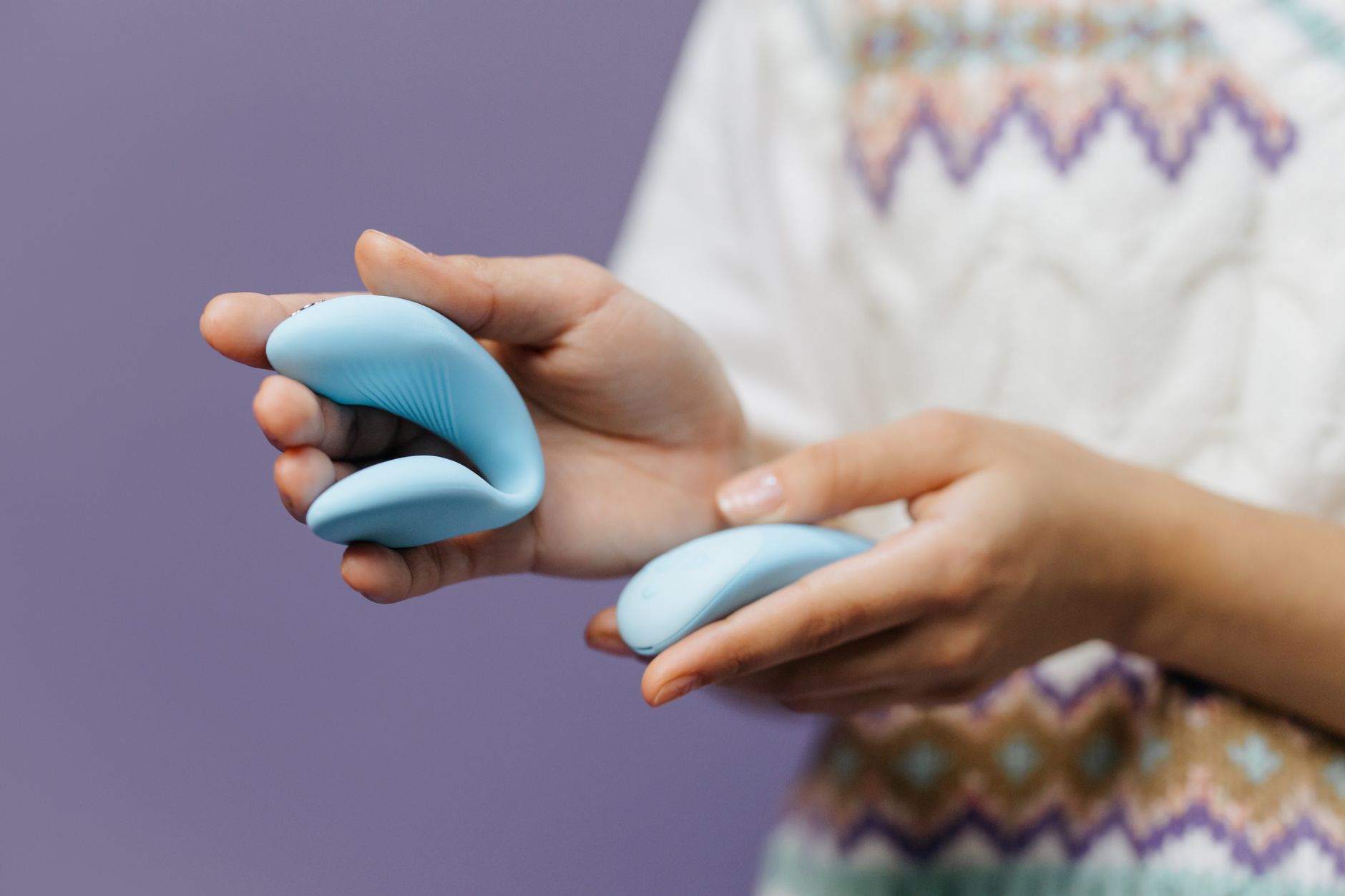
Photo by cottonbro studio on Pexels
The role of patterns in pleasure recovery
Lemon vibrators have multiple intensity levels and patterns. When you're rebuilding sensation after stress, patterns matter more than intensity. A pulsing pattern feels different from a steady hum. One might feel soothing while another feels stimulating. Your body gets to choose what feels good on any given day.
This choice is important. For months or years, your body might not have had agency in the pleasure department. Maybe sex felt obligatory. Maybe it felt like something that happened to you rather than something you participated in. Solo practice with a lemon clitoral vibrator gives you back that agency.
Some days you'll want Pattern 1. Low, steady, gentle. Some days Pattern 3 will suddenly feel incredible. You're not looking for the "right" answer. You're listening to what your body actually needs on that particular day. That skill of listening is the foundation for everything that comes later with a partner.
What happens in your nervous system as you practice
Each time you practice pleasure solo, you're literally rewiring neural pathways. Your brain starts to remember what arousal feels like. Oxytocin and dopamine begin circulating again. The tension in your pelvic floor gradually releases.
You might also notice that old feelings surface. Grief about what was lost. Anger about the stress. Sadness about the disconnection. That's normal. Your body is processing. You don't have to push through it. You can pause, breathe, come back another day. There's no rush. This is about reclaiming your pleasure, not performing your way back to health.
Over weeks or months of solo practice, something shifts. The clitoris becomes sensitive again in a good way. Arousal starts to feel possible. Your body remembers that safety and pleasure can coexist.
When to introduce your partner
There's no magic number of weeks or months. You're ready to bring a partner into your pleasure practice when three things are true. First, you can experience some level of pleasure solo without it feeling like a chore. Second, you're not using pleasure as a way to fix the relationship or prove you're "over it." Third, you and your partner have had honest conversations about what went wrong and what rebuilding actually means.
If you're bringing your partner in before that foundation is solid, you're likely to recreate the same dynamic that killed desire in the first place. Performance pressure. Obligation. The sense that you're doing this for them, not for you.
When the timing is right, your partner watching you use a lemon vibrator can be surprisingly healing. It gives them permission to see you as a sexual being again. It shows them what brings you pleasure. It creates a different dynamic than trying to fix things through partnered sex when the nervous system isn't ready.
Some couples find that solo practice with a clitoral vibrator becomes a regular part of their intimate life, not as a replacement for partnered sex but as a complement to it. You're not performing for them. You're reclaiming pleasure for you, and they get to witness it.
The slow reconnection with touch
Once solo pleasure practice feels manageable, nonsexual touch can gradually increase. A hand on your back. A kiss on your neck. Nothing with the goal of sex. Just sensation. Your nervous system needs to relearn that touch means safety, not obligation or performance.
Some couples add a lemon vibrator into this phase. Not for orgasm necessarily, but as a way of being together with pleasure. They might hold it while you use it. They might watch. They might simply be present in the room while you practice. This bridges the gap between solo and partnered without the pressure of traditional sex.
This phase can take weeks or months. That's not a sign you're doing it wrong. That's what healthy reconnection actually looks like.
Specific patterns and intensities after relationship stress
When your nervous system has been in protective mode, intensity often feels threatening. Your body might interpret a strong vibration as another threat. This is why lemon vibrators work so well. They let you start at a level that feels genuinely good, not just tolerable.
Most people rebuilding after relationship stress prefer patterns that feel rhythmic and predictable. Your nervous system likes patterns. They're soothing. Random intensity spikes can trigger your protective response.
As weeks pass and your nervous system settles, you might naturally want more intensity. That's your body telling you it's ready. But you're always in charge. If higher intensity suddenly feels wrong, that's information. Go back to what feels safe. Pleasure isn't a progression toward bigger and better. It's a conversation with your own body.
When to seek additional support
If you're practicing solo pleasure but it still feels impossible to access any sensation at all, that's worth exploring with a therapist. Sometimes the nervous system needs professional support to downshift from chronic stress.
If your relationship has involved infidelity, abuse, or significant betrayal, trying to rebuild sex life without addressing that trauma is like building a house on a foundation that's still cracking. A couples therapist who specializes in relationship recovery can help you determine if rebuilding sex is even the right goal right now, or if other repairs need to happen first.
And if one partner is enthusiastic about reconnecting sexually while the other feels genuinely shut down, that mismatch is important information. It might mean the relationship needs a conversation about what each of you actually needs, not just a strategy to get back to sex faster.
The timeline is different for everyone
I've had clients reconnect with pleasure in a few months and partners who needed a year or more. Neither timeline means anything about the strength of the relationship or the depth of desire. It's about how much stress your nervous system absorbed and how much time it needs to feel safe again.
Be patient with yourself. Solo practice with a lemon clitoral vibrator is how you rebuild the foundation. Everything else follows from that. Your pleasure matters. Not as a service to your relationship, but because you deserve to feel good in your own body.
Frequently asked questions
Can using a lemon vibrator solo actually rebuild desire in a partnership?
Yes, but it's not magic. Solo practice rewires your nervous system and helps you reconnect with your own arousal. Once you remember what pleasure feels like in your body, partnered sex becomes possible again. But the vibrator isn't fixing the relationship. It's just giving your nervous system permission to relax. The actual relationship work happens through conversation, honesty, and sometimes therapy.
How long should I practice solo before trying partnered sex again?
There's no set timeline. Most people need at least a few weeks of regular solo practice before even wanting to try. You're ready when you can experience pleasure without it feeling like a task or a performance. Some relationships benefit from months of individual practice before circling back to partnered intimacy. Let your body tell you when it's ready, not a calendar.
What if my partner feels threatened by me using a lemon vibrator?
That's worth a conversation, but not during sex. Talk about what the vibrator represents to them. Often it's actually about fear that they're not "enough" anymore. A lemon clitoral vibrator isn't competition. It's a tool for your own pleasure. If a partner genuinely can't move past insecurity about this, that might be a larger relationship issue that needs addressing with a therapist.
Is it normal to not feel much sensation at first when using a lemon vibrator?
Completely normal, especially if you've been stressed for years. Your clitoris might be somewhat desensitized. Your nervous system might be too activated to receive pleasure. This isn't permanent. With consistent solo practice, sensation usually returns over weeks or months. You're rewiring, not fixing something broken.
Should I use a lemon vibrator differently if my relationship is actively in crisis versus after things have calmed down?
Yes. If your relationship is still in active conflict, solo pleasure practice is about reclaiming safety in your own body. It's not about fixing the partnership. Use it as a way to reset your nervous system. Once the relationship crisis has somewhat resolved and you both want to rebuild, the practice shifts. It becomes a bridge back to intimacy together. The tool is the same. The intention is different.
Can I use a lemon vibrator with my partner while we're rebuilding if we're not quite ready for regular sex?
Absolutely. Many couples find this is the perfect middle ground. You get to experience pleasure and arousal together without the performance pressure of traditional sex. It helps partners see each other as sexual beings again. Plus it sends a signal to your nervous system that pleasure and partnership can coexist, which is what you're trying to relearn after stress has driven a wedge between you.
Rebuilding takes time, and your body knows the way
When a relationship has weathered years of stress, reconnecting sexually doesn't happen through force or willpower. It happens through patience and nervous system recalibration. A lemon clitoral vibrator is one tool for that work. It lets you practice pleasure in safety, alone, at your own pace.
The goal isn't to get back to where you were. The goal is to build something new. Something informed by what you've both learned. Something where pleasure is chosen, not obligatory. That takes time. But it's worth every moment you invest in it.
Ready to start? Find a quiet space, give yourself permission to slow down, and let your body remember what pleasure feels like. If you have questions along the way or want to talk through what rebuilding looks like for your specific situation, reach out to us. Your pleasure matters.