
Let's talk about the thing you're actually worried about
You've got a new partner. Things are good. And you're thinking about telling them you own a lemon vibrator—or introducing one into your sex life together. Here's the part nobody explains: this conversation isn't awkward unless you treat it like a confession. It's not. It's information. And information is how trust gets built.
I work with couples navigating exactly this moment. The ones who move through it successfully don't do it by accident. They do it by separating three things: your pleasure, their ego, and the actual logistics of sex. Mixing those up is where the friction lives.
Why the timing of this conversation actually matters
There's a window where this works best, and it's not "right before we have sex." That's panic mode. The right time is when you're still in the conversation phase of a new relationship. This means anywhere from date three to week two, ideally in a moment that's intimate but clothed. Maybe you're at their place, things are moving toward something physical but haven't yet. Or you're driving. Or you're in bed but not actively sexual.
Why does timing matter? Because if you spring this on someone mid-arousal, they're in a state where their brain is less available for processing information. They're flooded with dopamine and distraction. That's not the moment to ask them to think about something new. You need their actual mind present.
New relationships have a clock. For the first two to four weeks, people are more flexible, more curious, less defensive. They haven't yet constructed a narrative about who you are sexually. You're still mysterious. Use that window. After six weeks, patterns start to calcify. A partner who said yes enthusiastically to a lemon vibrator in week two might feel ambushed by one in week six because by then they've written a story about what sex with you looks like.
How to actually say it (the script that works)
Here's what doesn't work: "So I have this thing I want to talk about." Too ominous. Your partner's brain goes to bad places instantly.
Here's what does work: context plus curiosity plus invitation.
Something like: "I really enjoy using a lemon vibrator. It's something that helps me feel good, and I'd like you to be part of that if you're interested. No pressure either way, but I wanted to be honest about it now rather than surprising you later."
Notice what's in there. You're not asking permission. You're not framing it as a problem you need fixed. You're saying: this is part of how I experience pleasure, and I'd like to share it with you. That's a fundamentally different ask.
If your partner seems curious, great. Let them ask questions. Don't oversell. "What kind?" "It's a clitoral vibrator. Want to see?" Simple. If they seem hesitant, you go: "That's completely fine. I just wanted to be upfront. We can talk about it more whenever, or not at all."
Then actually mean it. If you've said it's fine to not use it together, and then you're secretly annoyed they don't want to, your partner will feel that resentment. And they'll close down. You've trained them that honesty has a cost.
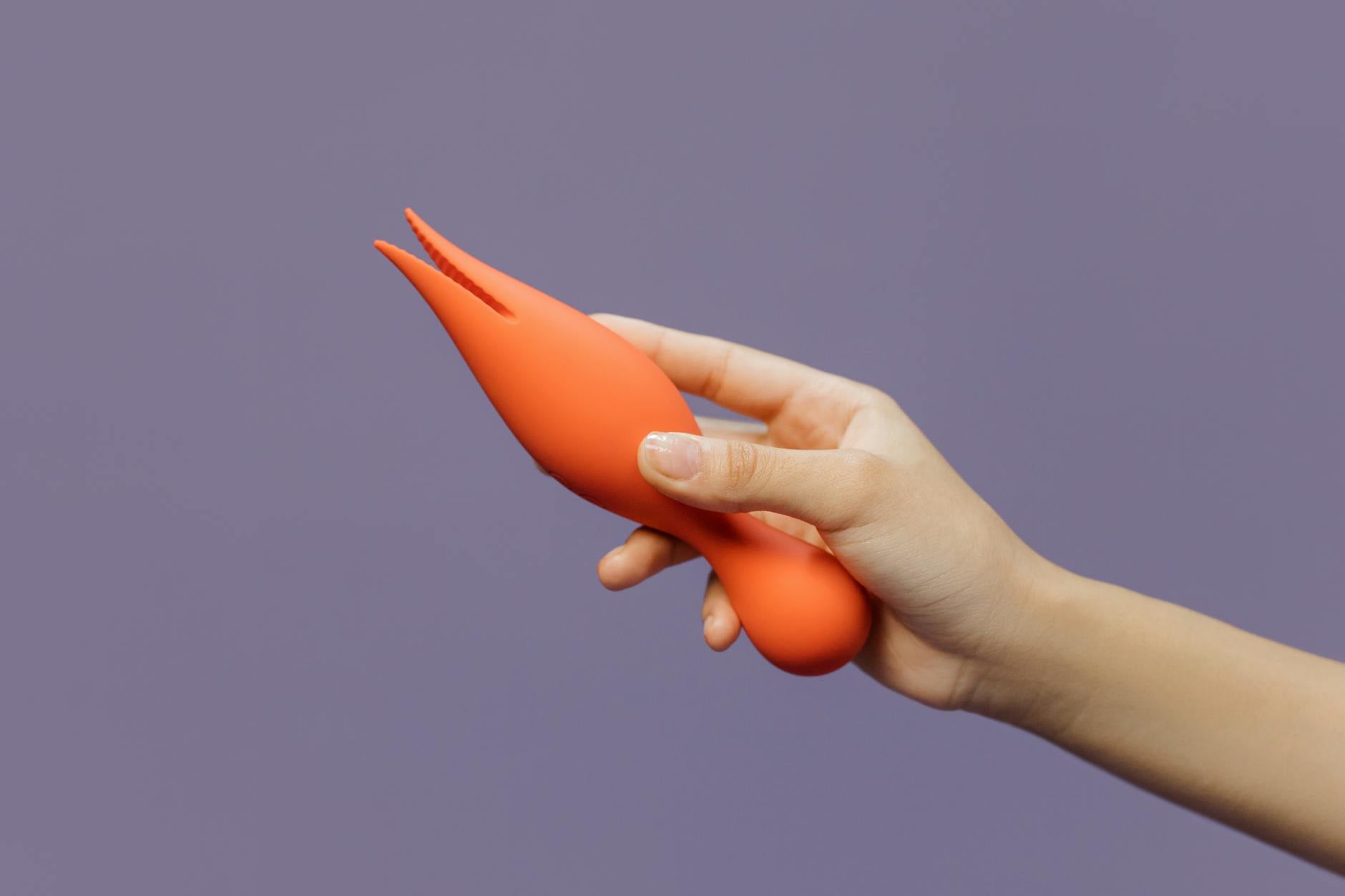
Photo by cottonbro studio on Pexels
The five things that usually come up (and how to handle them)
"Does that mean I'm not enough?" This is the ego question wrapped in insecurity. Here's what works: "It's not about you. It's about how my body responds to different kinds of stimulation. It's like how someone might love the sex you have together and also want a massage sometimes. Different sensations, same person loving you." Then actually show them how you use it solo, or describe it. Demystification kills a lot of anxiety.
"I don't know if I'm comfortable watching." Totally fair. You don't need an audience. A lemon vibrator works great alone, or integrated into partnered sex in subtle ways. You're not required to make it a performance. Say: "We don't have to do it together. But I wanted you to know it exists in my life." That removes the pressure.
"Can we use it together?" This is the yes, and now you need to set expectations. Bring it out when you're already aroused. Start without it. Then introduce it as part of foreplay or sex. A lot of new partners are worried they'll "mess up" using it on someone else. Give gentle direction: "A little softer," "Try the pulsing pattern," etc. Make it collaborative, not a performance evaluation.
"Is there something wrong with how you orgasm with me?" Another insecurity question. The answer is: "No. I orgasm great with you. This is about variety and sensation, not fixing a problem." And then prove it. Make sure you're still having good sex without the vibrator. Don't let the toy become a crutch that then proves their point.
"I feel weird about it." This one deserves patience. Some people have shame around sex toys. They grew up in environments where they felt wrong. You can't un-wire that in one conversation. What you can do is normalize it over time. Send them an article. Talk about how common it is. Introduce it slowly. Give them space to come around, or accept they might not.
What happens when they actually say yes
Okay, so your partner is curious. Here's the anti-pressure move: don't immediately jump to using it together. First date with the toy in the relationship should be low-stakes. Maybe you use it during foreplay while they watch. Maybe they hold it while you guide them. Maybe it becomes part of your solo routine that they just know about and see occasionally.
The reason I say this: early relationships are fragile. The sex is new. Both of you are nervous about whether you're doing it right. Adding a new variable can become a focus in a way that's not actually fun. Take your time. Let curiosity build naturally.
When you do use a lemon vibrator together, you're combining two things: your pleasure response and your partner's need to feel included. Those aren't the same thing. Your partner needs to see that using the vibrator makes you happy, not that it's a chore you're performing for their benefit. Use it because you want to. Let them watch or participate because they're interested, not because you're trying to convince them.
The thing nobody talks about: what if they want to use it on you differently than you use it on yourself?
This is normal. You know exactly what feels good. Your partner is guessing. You have two choices: guide them gently, or use it solo most of the time. There's no right answer. But if you're going to use it together, communication during sex is crucial. Pressure from a new partner to come in a specific way, on a specific timeline, using a specific toy, is the opposite of pleasure. It's performance anxiety with props.
Here's the frame: "I love that you want to use this with me. I know what feels good to my body, so I'll guide you. No pressure, no timeline." Then actually do that. "A little lower," "Hold it there," "That pattern feels amazing." Your partner needs feedback, not silence followed by frustration.
Why this conversation actually builds intimacy (not destroys it)
Most couples never talk about masturbation. They never talk about what toys they use. They never talk about how they orgasm alone versus with a partner. So when a lemon vibrator enters the picture, it feels transgressive. It feels like you're introducing something from outside the relationship.
But here's what actually happens when you talk about it early and honestly: you're telling your partner something true about your body and your pleasure. You're asking them to accept you as you actually are, not as a performance. That's how trust gets built. Not through pretending you don't have an internal life. Through sharing it.
The couples who have the best sex lives are the ones who talk about sex. Not constantly, not clinically, but actually. A partner who knows you own a lemon vibrator and is fine with it is already a better partner than one who doesn't know because you were too scared to tell them. The first partner has chosen you. The second one is choosing a fantasy version of you.
When to bring it out, when to leave it alone
Just because your new partner knows you have a clitoral vibrator doesn't mean it becomes a fixture. There's a big difference between "my partner knows I own this" and "we use this every time we have sex." The first is honest. The second is a pattern that can actually make partnered sex feel dependent on the toy.
In the first month or two, using a lemon vibrator occasionally is fine. Use it when you actually want to, not as a proof that your partner is attracted to you or interested in your pleasure. The moment you start using it out of obligation, or to convince a hesitant partner that you're into them, you've lost the plot. Go back to basics. Have sex without it. Remember why you like your partner.
There's also the longer-term question: does using a vibrator together actually improve your sex life, or is it a band-aid for something that isn't working? If you're in a new relationship and things are already stalling sexually, a toy isn't going to fix that. But if things are good and you want more variety, or if you want your partner to understand your pleasure better, a lemon vibrator can be a conversation starter that's also genuinely fun.
The conversation isn't one and done
You tell your partner once. Then you check in. "How do you feel about all this?" "Want to try it together sometime?" "Any questions?" These are low-pressure follow-ups, not interrogations. You're keeping the door open without pushing.
Maybe they'll never be interested. That's okay. Your pleasure isn't contingent on your partner's participation in every aspect of it. But maybe they'll get curious in month two. Or month six. People change their minds when they feel safe. You create safety by not punishing them for initial hesitation.
The bottom line
Introducing a clitoral vibrator in a new relationship is only awkward if you act like you've done something wrong. You haven't. You're just being honest. A partner worth keeping around will appreciate that honesty. The ones who can't handle it are probably telling you something important about how they handle vulnerability in general. That information is a gift, even if it doesn't feel like one.
Your pleasure matters. Your honesty matters. And a new relationship that can survive a conversation about how you actually experience your body is a relationship built on something real.
People also ask
How soon is too soon to mention you use a clitoral vibrator?
Anywhere from week one to week three, ideally in a moment that's intimate but clothed. The goal is before you're in an aroused state together, so they have mental space to process. Too early feels theoretical. Too late (after month one) feels like you were hiding something.
What if my new partner says they don't want me using a vibrator at all?
That's information. You have three real options: accept it and continue using your toy solo, have a longer conversation about where that boundary comes from, or recognize that this might be a fundamental incompatibility. You're not obligated to hide your pleasure for anyone, even someone new. But you also get to decide if their discomfort is a dealbreaker for you.
Can I use a lemon vibrator during partnered sex if my partner is hesitant?
Technically yes, but you shouldn't. If someone has expressed hesitation or discomfort, bringing it out anyway is ignoring their boundary. You can circle back to the conversation later. "I'm sensing you weren't sure about the vibrator. Want to talk about what made you uncomfortable?" But respect their no in the moment.
Does using a vibrator with a new partner make the sex better or just different?
It depends. A lemon vibrator can make orgasms easier for some people, which takes pressure off both partners. But if the introduction is rushed or you're using it as a band-aid for chemistry that isn't there, it can actually complicate things. Use it because you want to, not because you think it'll fix something.
What if they want to use it on me but I prefer using it on myself?
Both things can be true. You can use your vibrator solo most of the time and occasionally let a partner participate. Or you can set a boundary: "I like using this on myself, but I love that you're interested." You don't have to share every aspect of your pleasure.
How do I know if my new partner is actually comfortable or just saying yes to make me happy?
Pay attention to their body language when the vibrator comes out. Are they engaged or stiff? Do they ask questions or go quiet? Check in directly: "I want to make sure you're actually into this, not just going along with it." A partner who's genuinely comfortable will keep the conversation going. One who's performing will give short answers and change the subject.