When your body feels like it belongs to someone else
You know the feeling. Your mind is somewhere else, watching your body from outside it. Touch doesn't register the way it should. Pleasure feels distant, theoretical, like something that happens to other people. This is dissociation, and it's wildly common. Trauma, anxiety, depression, chronic stress, even just years of not being present during sex can all create this gap between your brain and your body.
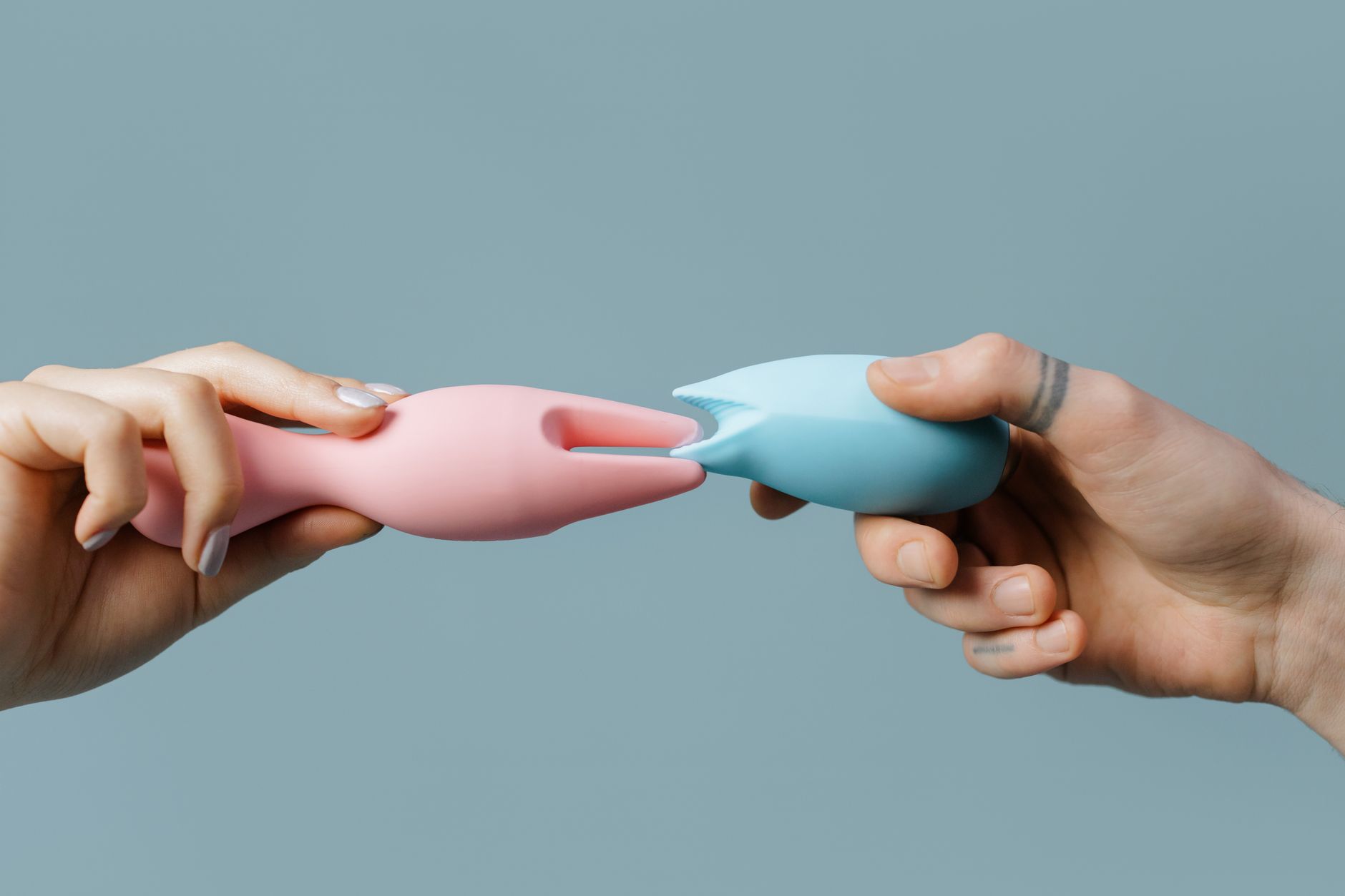
Here's what I want you to know: your clitoris didn't stop working. Your nerve endings are still there. Your capacity for sensation is intact. What's happened is that your nervous system went offline as a protection mechanism, and now reconnecting feels impossibly hard. A lemon clitoral vibrator won't fix the underlying trauma or stress, but it can be a powerful tool for bridging that gap and reminding your body what sensation actually feels like.
Why dissociation makes pleasure vanish
When you're dissociated, the signal from your clitoris to your brain gets quieter. Touch might feel numb, delayed, or like it's happening to someone else entirely. Traditional stimulation relies on your nervous system being present enough to receive the signal. If you're not there, it doesn't matter how good the stimulation is. A lemon vibrator works differently. The consistent, targeted pressure and pulsing patterns of a suction device are forceful enough to break through that fog. They don't rely on you being hyperfocused or present in the same way that manual touch does. They almost demand your attention.
This matters because reconnecting with your body isn't about willpower or relaxation mantras. It's about sensation loud enough to bring you back into your physical form.
The first step: permission and tiny windows
Don't start by expecting pleasure. That's too much pressure and will backfire. Instead, start by expecting curiosity. Set aside 10 minutes. Tell your partner, flatmate, or whoever that you need quiet space (no judgment, no conversation afterward unless you want it). Lie down somewhere comfortable. This is not about performance. This is about running an experiment on your own nervous system.
Turn on a lemon vibrator on the lowest pattern. Pattern 1, setting 1. This is barely a hum. Run it across your forearm first, not your clitoris. Feel the sensation. It's okay if it feels weird. Weird is the expected starting point.
Now move it to your outer thigh. Then your inner thigh. Work your way toward your genitals without rushing. The goal here is to let your nervous system recognize: "Oh, I can feel that. My body is registering input." This is a signal that the dissociation hasn't actually broken your hardware. It's just disconnected the wiring.
Building the bridge back slowly
When you finally move the vibrator to your clitoris, stay on the lowest pattern. You're not looking for pleasure yet. You're looking for sensation. Can you feel it? Does it feel tingly, numb, sharp, warm, distant? All of these are data points. Your job is to notice without judging.
Stay here for 2 to 3 minutes, if you can. If it feels unbearable, stop. Stopping is not failure. Stopping is listening to your nervous system. Try again tomorrow or in three days. Rebuilding sensation takes time, especially if trauma is involved.
If you can tolerate the lowest pattern, try moving to pattern 2 after a few sessions. The increase in intensity can sometimes help wake up nerves that have been sleeping. But again, there's no rush. Some people need weeks at the lowest setting before moving up feels right.
Managing the weird feelings that come up
When you're reconnecting with a dissociated body, unexpected emotions bubble up. Sadness. Anger. Fear. Relief. Sometimes all of them at once. This is normal. Your nervous system is reactivating, and emotions are stored in the body. If you start to feel intense emotion during a session with a lemon vibrator, pause. Breathe. You can continue or stop. Both are okay.
If you notice anxiety spiking, it might be worth checking in with a therapist who specializes in trauma or dissociation. A vibrator is a tool, not a treatment for underlying trauma. But used alongside therapy, it can accelerate reconnection in ways that talking alone sometimes can't.
The sensation of sensation returning
One day, usually after several weeks of patient, low-pressure sessions, something shifts. The vibration starts to feel good instead of just noticeable. You might notice your breath changing. Your hips might move slightly without you deciding to move them. These are tiny signs that your parasympathetic nervous system is coming back online and your body is starting to trust that it's safe to feel again.
When this happens, you have permission to speed up. Gradually. Move to pattern 3. Stay there until it feels normal, then pattern 4. Some people eventually work up to the higher patterns and discover intense pleasure. Others find that patterns 2 and 3 are their sweet spot and never need more. Both are completely fine.
The patience part (which nobody wants to hear but everyone needs)
If you've been dissociated for years, reconnecting takes months, not weeks. If you're expecting to move from numbness to orgasm in three sessions, you'll get frustrated and quit. That's not because the lemon vibrator doesn't work. It's because your nervous system needs time to remember that pleasure is possible.
Meanwhile, every session where you feel something is a win. Every time you notice "oh, that's warm" or "that made my breath catch" is progress. You're rebuilding the neural pathways that trauma or stress switched off.
When to pause and get support
If using a vibrator triggers flashbacks, intense fear, or uncontrollable shaking, stop immediately and reach out to a trauma-informed therapist. This isn't a sign that vibrators are bad. It's a sign that your nervous system needs professional support to process what's underneath the dissociation.
If you're on antidepressants or anti-anxiety medication and feeling completely numb even at the highest patterns, mention it to your prescribing doctor. Sometimes medication adjustments help. Sometimes it's just a side effect you have to manage, but it's worth asking.
If you're dissociated because of a specific relationship dynamic or ongoing stress, the vibrator helps with the symptom, not the cause. Therapy, boundary-setting, or life changes might need to happen in parallel.
The thing nobody tells you about reconnection
When sensation starts coming back, it feels vulnerable. You're remembering what it's like to feel. That opens doors to feeling other things too: grief about lost time, anger at what caused the dissociation, joy that your body is waking up. All of this is part of the healing process, and it's worth sitting with.
You're not trying to get back to who you were before dissociation happened. You're building something new: a relationship with your body that's grounded, honest, and based on what actually feels good right now, not what you think should feel good.
Questions people ask about reconnection and vibrators
Does using a vibrator make dissociation worse?
No, not if you approach it gently. Starting at the lowest patterns and building slowly actually helps your nervous system recognize that sensation is safe. What makes dissociation worse is pushing too hard too fast, which is why patience matters. If the vibrator triggers you, that's different. That usually means your body needs trauma work before pleasure work.
How long before I feel normal again?
It depends on how long you've been dissociated and what caused it. Some people reconnect in 6 to 8 weeks of consistent, gentle vibrator use. Others need months. There's no standard timeline. The important part is noticing small shifts: maybe you feel sensation earlier than you did last week, or you can stay present for longer sessions. Those are wins.
Can I use a lemon vibrator with a partner if I'm dissociated?
Maybe. For some people, having a partner present creates more pressure and deeper dissociation. For others, knowing their partner is supporting the process helps them feel safe. Talk to your partner about what you're trying to do. Let them know that this isn't foreplay yet. It's reconnection work. If their presence makes you more numb, save partner sessions for later when sensation has started returning.
What if the vibration itself feels uncomfortable?
Then try a different pattern or take a break. Not everyone's nervous system likes the same rhythm. Some people do better with the pulse patterns on a lemon vibrator. Others prefer the steady hum. Experiment. And if vibrators just don't feel right for your body, that's valid. There are other ways to reconnect: gentle touch, warmth, movement, breathwork. The vibrator is one tool, not the only one.
Is this normal or do I need therapy?
Dissociation is a symptom, not a diagnosis. It can be a normal response to stress or trauma, or it can signal something that needs professional attention. If you've been dissociated for more than a few months, if it's affecting your daily life, or if you're not sure what caused it, seeing a therapist is a good idea. A vibrator can be part of your healing toolkit, but it shouldn't be your only tool.
Can I use a lemon vibrator if I was sexually assaulted?
Possibly, but only with professional support. Rebuilding pleasure after sexual trauma is delicate work, and it happens best with a trauma-informed therapist in the picture. A vibrator might be part of that process eventually, but it's not the starting point. Work with a professional first. They can help you figure out if and when vibrators feel right.
Getting your body back
Reconnection is slow. It's unglamorous. It's not a Netflix montage where you go from numb to orgasm in 90 seconds. It's weeks of lying down with the lowest pattern of a lemon vibrator and noticing that you felt something. It's patience and gentleness and the kind of self-compassion that feels impossible until it becomes automatic. But here's what I know from working with hundreds of people rebuilding pleasure: your body remembers. It wants to feel good again. It just needs time and consistent, gentle permission to come back online. A lemon clitoral vibrator can be the tool that makes that possible.