Let's be real about rebuilding intimacy
When physical connection has gone quiet in a relationship, the pressure to just "get back to normal" can feel suffocating. You want things to feel easy again, but your body doesn't remember how. Introducing a toy into that space feels risky. What if it makes things weird? What if your partner feels replaced? What if you're not aroused enough for it to even work?
Here's what I see in my practice: lemon vibrators can actually lower the stakes. They shift foreplay from a performance (orgasm, penetration, the "right" sequence) into something collaborative and exploratory. No one's waiting for anyone else to finish. No one's worried about lasting long enough. You're just rediscovering each other, together.
Why lemon vibrators are different from other toys
Most vibrators demand a specific approach. You have to position them right, maintain consistent pressure, find the angle that works. That's fine if you're solo. But when you're with a partner and you're already feeling vulnerable about physical closeness, the last thing you need is a toy that requires technical precision.
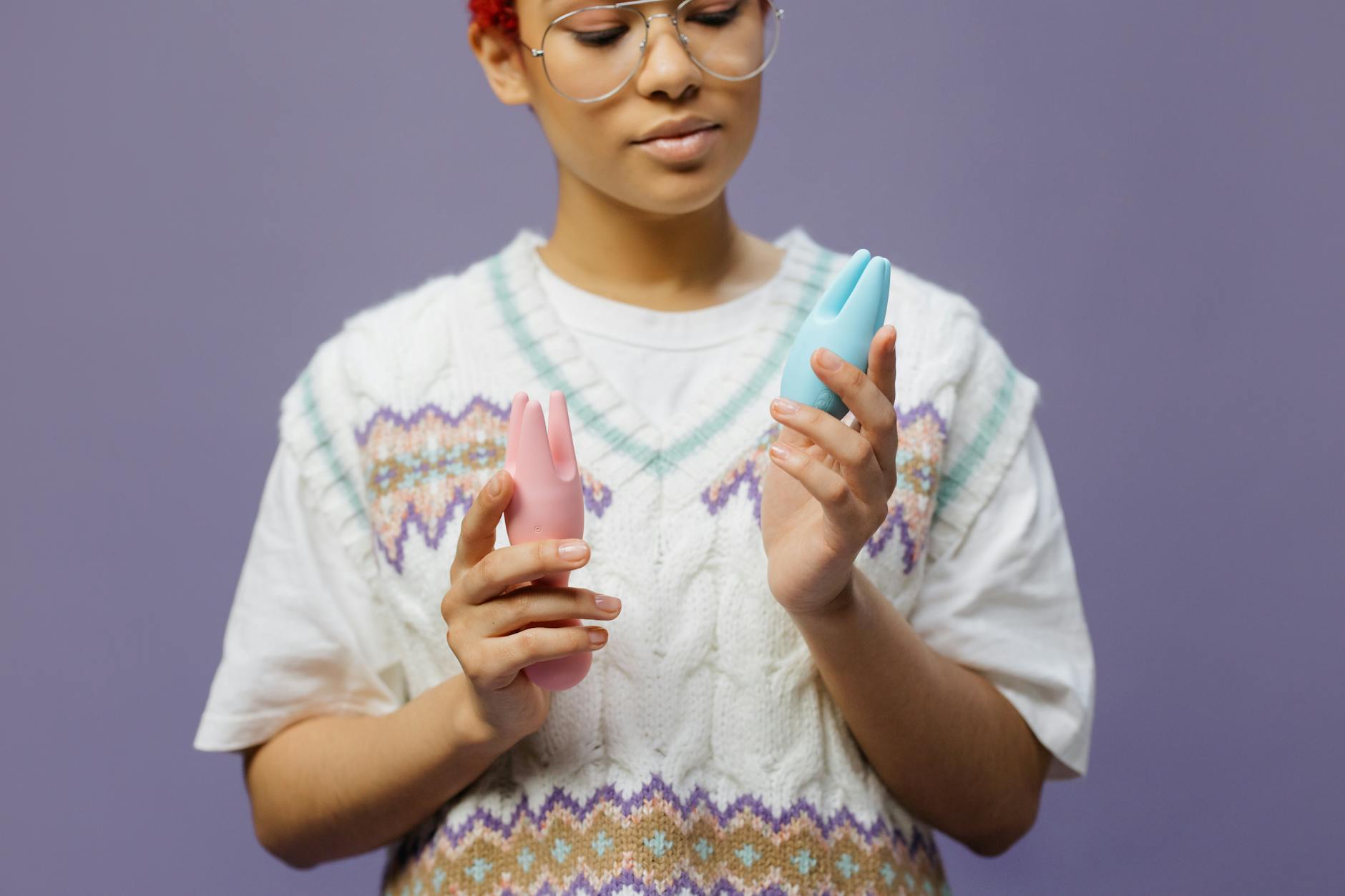
Lemon clitoral vibrators use air-suction technology, which means they work with variable touch rather than constant friction. This matters for foreplay because neither of you has to be "doing it right." Your partner can hover their hand, move closer and farther away, and feel the toy respond. You get continuous sensation without the performance pressure.
The design is also smaller and less intimidating than larger wand vibrators. It looks like a toy meant for someone. It's not a medical device. That psychological difference is more important than it sounds when you're rebuilding trust in your own pleasure.
Setting expectations before you introduce it
This conversation is separate from the moment. Not in bed, not when you're both undressed, not right before sex. Pick a calm time. Coffee on the couch. A walk. Somewhere neutral.
The point is not to explain the toy. The point is to explain what you actually want: "I've been thinking about how we could make foreplay feel more like play again. Less pressure. More just... exploring together." That's the real conversation. The toy is just the vehicle.
If your partner has concerns, listen without defending. "Will you need it to orgasm?" "I don't think so, but I'm curious if it changes how things feel." "Will this mean I'm not enough?" "It means I want us both to have more fun. That's all." Honest, not reassuring. Reassurance often sounds like you're hiding something.
The actual mechanics of using it together
Start fully clothed. Not during sex, not during foreplay yet. Just exploration. Let your partner hold the lemon vibrator. Let them feel how it works on your arm, your neck, somewhere non-sexual first. They get to feel the sensation too. They get to understand the rhythm.
Then, when you're both ready and clothes are coming off, invite them to use it on you. Not as a replacement for their hands or mouth, but as another layer. Your partner might use it while kissing you. They might switch between their fingers and the toy. The variety itself is what rebuilds novelty into the experience.
Start on the lowest settings, always. Your body might be sensitive to stimulation right now, or it might take time to warm up. Either way, there's no advantage to intensity when you're relearning each other. The goal is sensation and presence, not orgasm.
Why sharing the toy changes the dynamic
When your partner is holding the vibrator, they're more present. They're watching your face. They're adjusting based on your breath, your movement, whether you're leaning in or pulling back. That feedback loop is what rebuilds physical intimacy. It's not about the toy doing something magical. It's about your partner actively noticing you.
Honestly, this is where a lemon vibrator is different from you using it alone. A suction toy doesn't lock you into one position or sensation. Your partner can be creative. They can tease. They can build intensity slowly. They can pay attention in ways that feel like genuine desire, not just mechanics.
For partners who have felt distant or who worry they're not "good enough" at sex anymore, this reverses that anxiety. They're not being replaced. They're being invited into something more interesting.
Troubleshooting common friction points
"It feels clinical or weird." That's normal the first time. Weirdness fades fast once you realize it's just another way of touching. Give it three or four times before you decide.
"I don't feel anything." / "I'm not getting aroused." Arousal might take longer than before. That's okay. A lemon vibrator works best when you're already somewhat turned on. Start with more traditional foreplay first. Use the toy after, not instead.
"We keep laughing instead of getting into it." Good. Laughter during sex is not a failure. It means you're relaxed. Eventually the laughter becomes something else, or it doesn't, and you still had a connected moment. Both count.
"My partner wants to use it all the time now." Set boundaries. "I love this, and I also want variety. Let's use it twice a week instead of every time." You can want something and not want it constantly. That's healthy.
How foreplay changes when you're rebuilding
When physical connection has been absent, foreplay often stops being exploratory and becomes transactional. You're both waiting to get to "the point." Introducing a lemon vibrator can actually lengthen foreplay because neither of you is racing toward the finish line.
You might find you want 30 minutes of foreplay instead of 10. You might find your partner's hands matter more, not less. You might discover that orgasm isn't even the goal anymore, which is wild until it's not, and then it's liberating.
For some couples, lemon vibrators become a permanent part of their sexual routine. For others, they're useful for a season, while you're rebuilding, and then fade back. Both are fine. The point is having options that feel collaborative rather than one person driving everything.
The practical stuff that actually matters
Charge it before you need it. A toy that dies mid-moment kills the mood faster than anything. Keep it clean between uses with mild soap and water. If you're sharing it with a partner, this is easy because you're in the shower together anyway, which is its own foreplay opportunity.
Lubrication helps. Even though a lemon vibrator doesn't require as much prep as other toys, a little water-based lube makes sensation smoother and more comfortable, especially if you're sensitive. Don't overthink the product. Any decent water-based lube works.
Start slow on the settings. You can always turn it up. You can't un-turn it up if you're already overwhelmed.
When to get professional support
If you're rebuilding after a significant rupture in trust, betrayal, or sustained distance, a couples therapist is worth considering alongside (not instead of) anything else you're doing. A therapist can help you both understand what caused the disconnection and whether you actually want to rebuild or whether you want something different.
A lemon vibrator can ease physical reconnection, but it can't repair foundational issues. If you're using it to avoid a deeper conversation, that's worth noticing.
FAQ: Questions you're probably thinking right now
Can a lemon vibrator replace emotional intimacy that's missing?
No. Physical sensation is separate from emotional closeness. A lemon clitoral vibrator can help you feel your body again and connect with your partner in a sensual way, but if the emotional distance hasn't been addressed, the physical reconnection won't stick. Start with the deeper conversation first.
What if my partner refuses to try toys?
That's their boundary, and it's worth respecting. But also worth exploring why. Is it discomfort? Insecurity? Religious or cultural belief? A desire for "vanilla" sexuality? Understanding the root makes it easier to know whether this is negotiable or non-negotiable for you.
How do you bring it up without sounding like you're criticizing their performance?
Frame it as "I want us to explore together," not "I need more from you." The difference is subtle but real. One invites partnership. The other creates defensiveness. Use "I" statements about your own curiosity, not "you" statements about their shortcomings.
Is it okay if I use the vibrator alone during this rebuilding phase?
Absolutely. In fact, knowing your own body and what brings you pleasure makes partnered sex easier. If you use a lemon vibrator solo, you understand how it feels, what settings work for you, and what you actually want from it. That knowledge is useful when you eventually introduce it with your partner.
What if we try it and it makes things worse?
Pause it. Don't use the toy for a few weeks. Go back to basics with kissing, touching, presence. Then decide whether you want to revisit it or move on. A toy that creates anxiety isn't worth keeping around. Sometimes the simple things like more frequent kissing, eye contact during sex, and longer foreplay work better.
How do you know if you're actually rebuilding or just going through the motions?
You'll notice small shifts. You reach for your partner more. You initiate things. You feel less anxious before sex. Your partner seems more present. These are quiet markers that something's actually changing, not just that you're trying harder. A lemon vibrator can support this, but you're the ones doing the actual rebuilding.
The real work is about presence
I've seen lemon vibrators transform relationships, and I've seen them sit in a drawer unused. The difference was never the toy. It was whether both people actually wanted to rebuild. The toy just made it easier to start having that conversation with your bodies again.
If you're serious about reconnecting with your partner, you're already halfway there. You're thinking about foreplay. You're considering tools that might help. Now have the actual conversation. See what your partner wants. Go slow. Pay attention. A lemon vibrator can be part of that journey, but presence is the real ingredient.
Want to talk through your specific situation? Reach out to us. We're here to help you figure out what actually works for you and your partner.