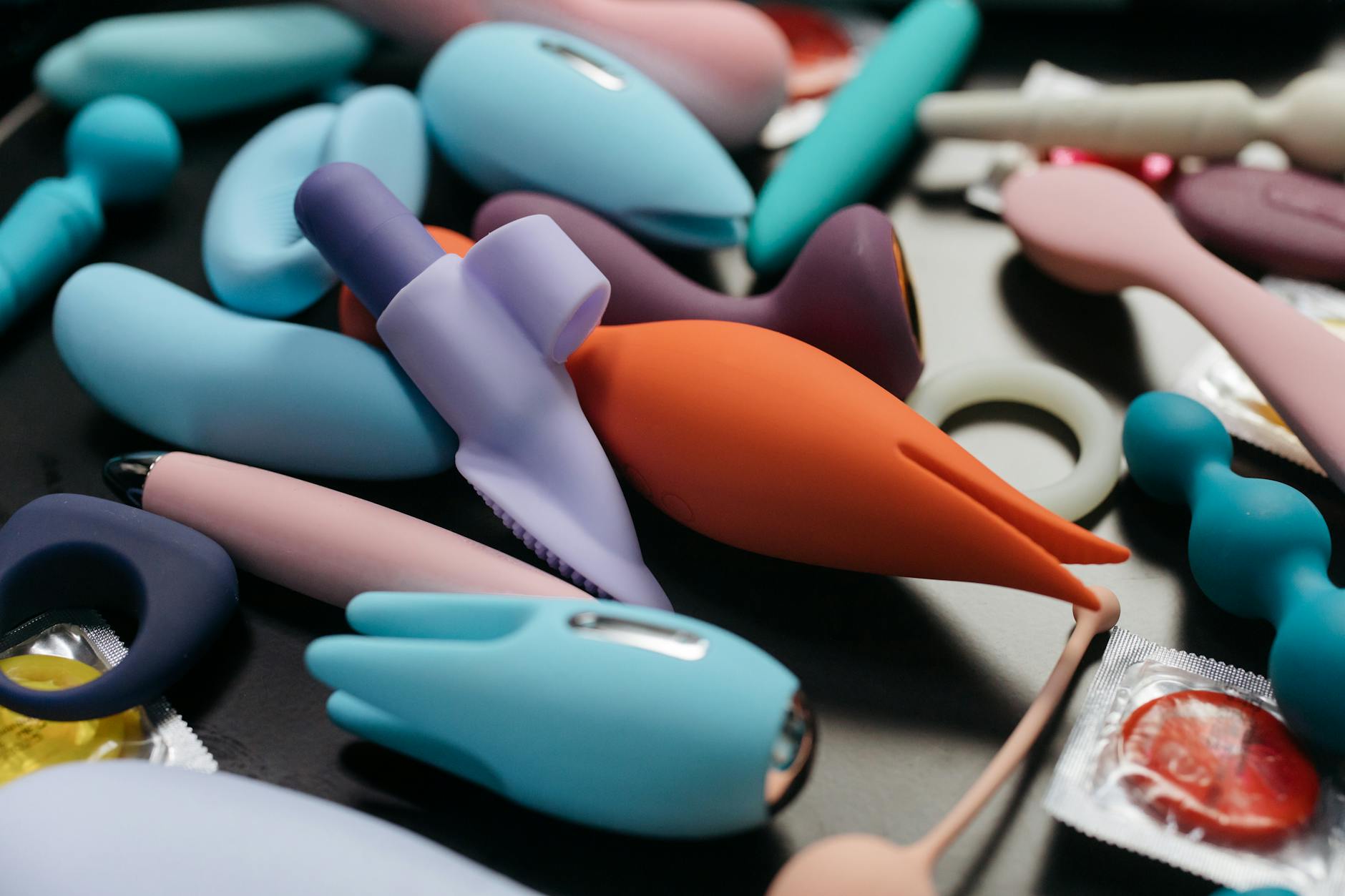
Here's the thing about couples and toys
Most of you have never actually talked about it. Not properly. You've made jokes, scrolled past ads, maybe felt a tiny flicker of curiosity that you immediately shut down. And then nothing. Years of nothing. That silence doesn't mean you don't want it. It usually means you're both waiting for the other person to bring it up first, which is its own kind of stalemate.
I work with couples every week who describe this exact dynamic. The desire is there. The willingness is there. What's missing is permission—and a framework that doesn't feel weird or performative.
A lemon clitoral vibrator, honestly, is one of the least intimidating ways in. Here's why, and how to actually start the conversation.
Why couples avoid toys (even when they want them)
The avoidance usually isn't about prudishness. It's about three overlapping fears:
**Fear one: "This means something is wrong with our sex." It doesn't. Adding a toy doesn't fix a broken system. It expands a working one. The couples I see who introduce clitoral vibrators almost always have decent communication and attraction already. They're not trying to resurrect anything. They're trying to deepen.
**Fear two: "My partner will feel replaced." This one sits underneath a lot of silent resistance. If you have a vulva and you've never orgasmed from penetration alone, a lemon suction toy might be the first tool that actually works for you. That can feel like a relief or a threat, depending on the frame. If your partner interprets it as "now you don't need me," you've got a conversation problem, not a toy problem.
**Fear three: "It's going to feel clinical or embarrassing to buy it together." Fair. Most couples don't know how to make pleasure shopping feel natural. The packaging, the websites, the lighting in brick-and-mortar shops. It all reads as sterile or sleazy, nowhere in between.
How to actually start the conversation
Forget the setup. No Netflix documentary on sexuality, no wine-fueled heart-to-heart, no note left on the pillow. Those feel calculated, which is probably why they've never worked for you before.
Instead: **bring it up like you'd bring up a restaurant you want to try."
"Hey, I saw this thing online. The reviews are actually really solid. Would you be open to trying something together?" That's it. Low stakes. Curious. Not a declaration.
The key is to lead with your partner's pleasure, not the toy itself. "I read that this really works for people who need more direct stimulation" is different from "I want a vibrator." Same object, different frame. One is about them. One is about you.
Most partners who've been avoiding this conversation are actually relieved when it finally happens. Relieved and a little defensive, often in the same breath. You might get "I thought our sex was fine" before you get "okay, let's look at it together." That's normal.
What to actually say if they seem hesitant
Don't defend the toy. Defend the experience. "This isn't about what's missing. It's about what we could feel together." That's a fundamentally different sentence.
If your partner has performance anxiety (a very common pattern), you might also say: "I want you to see that my pleasure isn't something you have to produce alone. It's something we can build together." A lemon clitoral vibrator isn't a replacement for your partner's touch. It's a collaborator. You're both in the room. The vibrator is just another hand, in a way.
For partners with penises: the fantasy here is often that adding a vibrator will diminish their role. Actually, the opposite usually happens. When your partner is relaxed and enjoying themselves intensely, your own pleasure often deepens. You're not competing with the device. You're both working toward the same outcome.
The first purchase (make it easy)
Don't overthink the model. The Lem or a similar lemon vibrator from Hello Nancy is a solid entry point because it's simple, durable, and the suction mechanism is gentle enough for beginners while sophisticated enough for people who've used other toys.
Buy it online together if that helps. Sit next to each other, look at options, read a few reviews out loud. Make it collaborative. When the box arrives, open it together without the weight of a "special moment." Just a regular evening.
Clean it, charge it, and don't feel like you have to use it immediately. Sometimes the best part of introducing a new tool is the relief of just having acknowledged it. The actual use often follows naturally, a few days later, when one of you thinks "okay, let's try that."
The first time you use it together
Don't make it a performance. This is where a lot of couples get stuck. They try to orchestrate some perfect moment, and the pressure kills it.
Honestly, the easiest entry is solo exploration first. You (the person with the vulva) spend time with it alone, figure out what feels good, what patterns work, whether you like it during foreplay or as part of solo time. Then when you're in bed together, you can simply bring it into what you're already doing. It doesn't have to be a production.
If your partner wants to hold it or control it, awesome. If you prefer to hold it yourself while they touch you elsewhere, that's equally valid. There's no choreography. You're just adding one more tool to what already works.
The conversation that actually matters
A lemon clitoral vibrator can transform physical pleasure. But it only works if the emotional framework is solid. This means checking in about what pleasure actually means to both of you.
Some partners struggle with the idea that orgasm can be the goal. Others find that introducing a vibrator gives them permission to think about pleasure differently. Some couples discover that the vibrator opens up new conversations about desire they've been avoiding for years.
The toy isn't the point. The willingness to prioritize mutual pleasure is the point.
If you're approaching this from a place of genuine curiosity and care for your partner's experience, most resistance softens. Not all. Sometimes you discover your partner truly isn't comfortable, and that's information worth having. But most often, the avoidance dissolves the moment someone brave enough says "I want to try this. With you."
What to expect from the physical experience
If your partner has never had an orgasm from direct clitoral stimulation alone, or if orgasms have always been subtle, a quality lemon suction toy often produces noticeably different sensations. Deeper. More concentrated. Sometimes almost startling in their intensity.
That intensity can take a few sessions to get used to. You might need to check whether the vibrator is too intense for your body. Starting on a lower setting, using it during foreplay rather than diving straight in, and allowing plenty of time for arousal all help.
For partners watching this happen with their partner for the first time, it's often deeply erotic. Seeing someone you care about experiencing genuine pleasure, without self-consciousness, changes something. That's the actual magic of introducing this together.
When communication matters most
If one of you feels less present during toy use, say so. If it's hitting differently than you expected, name it. If you're enjoying it but worried what it means, talk about that too. The couples who integrate toys successfully are almost always the ones who treat the experience as just another opportunity to check in with each other.
After the first time, a simple "How was that for you?" opens up way more than you'd expect. Sometimes the answer is "I loved it." Sometimes it's "I felt self-conscious." Sometimes it's "I want to try it differently next time." All of those are worth hearing.
Introducing a lemon vibrator to your partnership isn't about fixing something broken. It's about saying, together, that pleasure matters enough to explore. And honestly, that's the conversation most couples need to have anyway.
FAQ
How do I know if my partner will be open to using a lemon clitoral vibrator together?
You don't until you ask. But most partners respond better to curiosity than to assumption. Lead with genuine interest in their experience, not pressure. "I read something interesting, would you consider trying this?" gives them room to opt out without shame.
What if my partner thinks toys mean our sex is boring?
That's a common concern, and it usually points to a deeper conversation about pleasure that needs to happen anyway. You might say: "Exploring together isn't about what's missing. It's about what we could feel." Also consider asking what they think "good sex" is. Often, that assumption is the real barrier.
Should I use a lemon vibrator during penetration, or separately?
Both work. Many couples use a lemon clitoral vibrator alongside penetration because it stimulates the external clitoris without interfering with penetrative sensation. Some prefer to use it during foreplay, or as a solo experience one person has while their partner is present. There's no rule. Experiment.
What if my partner wants to be in control of the vibrator?
That's actually common and often feels good for both people. If your partner holding the vibrator makes you uncomfortable, that's worth discussing. Similarly, if you prefer to control it yourself, say so. Comfort and agency matter.
How do we talk about pleasure differently after introducing a toy?
Start by asking questions. "What did that feel like?" "Do you want to use it again?" "Is there anything you'd do differently?" These open conversations often reveal what each of you actually wants, which might be different from what you've assumed.
Is a lemon suction toy like the Lem going to feel too intense for my first time using a vibrator?
Maybe. Which is why starting on a lower setting, using plenty of lubrication, and allowing time for arousal matters. If you're newer to vibrators, you might also want to explore how intense different lemon vibrators feel before jumping to the most powerful option.
The real ending
Most couples avoid toys because nobody gives them permission to want them. I'm here to say: your desire for deeper pleasure, together, is normal. A lemon clitoral vibrator isn't a sign that something is broken. It's often a sign that you're both ready to build something better.
The conversation will probably feel awkward for about thirty seconds. Then it won't. And if your partner is someone you trust and someone who cares about your pleasure, the yes usually follows quickly.
If you need help with the conversation itself, our guide on how to introduce a lemon vibrator to a reluctant partner walks through the specific language that works. But honestly? Just ask. That's the whole magic right there.