How to Use Lemon Vibrators After Childbirth When Rebuilding Sensation
Let's be real: postpartum bodies are not the same. Your pelvic floor has been through something massive. Hormones are bottoming out. Sensation might feel muted, numb, or honestly, nonexistent in places where you used to feel everything. And if you're thinking about pleasure at all right now, you're probably also thinking "Is this normal?" and "Will it ever come back?"
Yes. And lemon clitoral vibrators, used thoughtfully, can actually speed up that return.
I'm not talking about jumping back into the same rhythm you had before pregnancy. I'm talking about rebuilding sensation strategically, managing the physical realities of recovery, and using the right tools to reconnect with your body on its own timeline. That's where clitoral vibrators come in.
The postpartum sensation problem nobody mentions
After childbirth, your clitoral sensitivity often drops. Hard. This happens for several reasons that are actually worth understanding.
First, estrogen and progesterone crater. These hormones don't just affect mood. They change tissue thickness, blood flow, and nerve responsiveness everywhere, including your clitoris. Your nerves are still there, but they're getting quieter signals.
Second, the pelvic floor gets stretched, sometimes torn. Even without tears, the muscles are fatigued and overstretched. This changes the physical feedback loop your body uses to feel pleasure. It's like turning down the volume on a speaker you already can't hear clearly.
Third, you're exhausted. Sleep deprivation genuinely dulls sensation. Your nervous system is wired for threat detection (is the baby breathing?) rather than pleasure. Rewiring that takes time and permission.
The fourth factor almost nobody discusses: you might have some legitimate trauma. Labor is intense. Recovery is long. Your relationship with your body might feel complicated right now. That emotional distance shows up as physical numbness.
So when you try to have sex and feel... nothing? That's not a sign you're broken. That's your body being exactly where it should be, given what it's been through.
Why lemon vibrators work better for postpartum recovery than other tools
Here's where lemon clitoral vibrators have a real advantage. Traditional vibrators use either rumbling or buzzing. Buzzing vibrators create high-frequency stimulation that can actually feel painful on postpartum tissue that's sensitive, inflamed, or just extra tender. Rumbling vibrators are gentler, but they still rely on direct mechanical pressure.
Lemon vibrators use suction and gentle pulsation. This is genuinely different. Suction stimulates the clitoris without requiring the kind of direct friction that can irritate recovering tissue. The sensation reaches deeper nerve networks without demanding your most sensitive outer tissues to do all the work.
This matters specifically postpartum because:
- You can start much gentler and control intensity precisely
- Suction sensation is less likely to trigger pain or that weird numb-but-hurt feeling
- The gentle pulsing patterns can actually help rewire sensation as you recover
- You feel stimulation without pressure, which your healing pelvic floor will appreciate
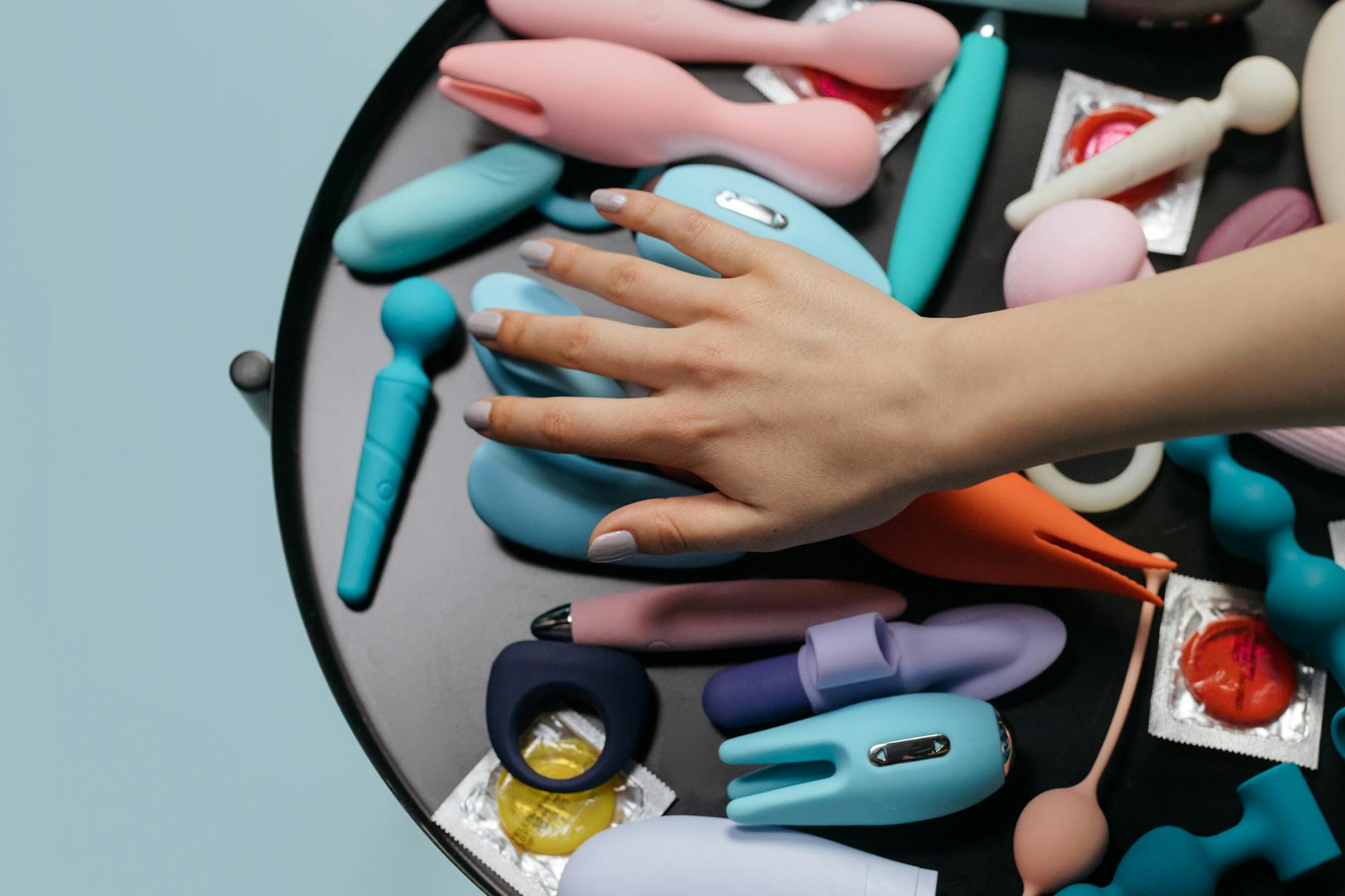
Photo by cottonbro studio on Pexels
The timeline that actually matters
Most medical guidance says "wait 6 weeks." Here's the thing nobody tells you: that's the minimum clearance for anything entering the vagina. Clitoral stimulation is different. You can often start exploring clitoral sensation much sooner, as long as you're careful.
Weeks 2-4 postpartum: focus on sensation discovery, not pleasure. This is about reconnecting with your body's ability to feel at all. Use a lemon vibrator on the lowest setting for 2-3 minutes, just exploring. No goal. No expectation of orgasm. Just noticing where you feel things and where you don't. Many people find that the regular gentle stimulation actually helps restore sensation faster than waiting.
Weeks 4-6: you can start playing with slightly higher intensities if things feel good. Still keeping sessions short. Still without any goal except noticing what your body can feel.
After 6 weeks (with medical clearance): now you can really explore. But don't jump to your old intensity. Your clitoris hasn't been stimulated the same way in months. It needs to learn again.
The key thing: this isn't about rushing back to sex. It's about your nervous system remembering that pleasure is possible.
How to actually use a lemon vibrator postpartum
Five practical steps:
Start alone. Not because partnered pleasure is wrong, but because you need to know what you can feel before adding anyone else's expectations into the equation. Solo exploration gives you permission to go slow without worrying about your partner's patience or timing.
Use lubrication even though you might not think you need it. Postpartum tissue is thinner and more fragile. Water-based lube isn't just about comfort. It actually protects the tissue and makes the suction sensation cleaner and more pleasant.
Begin at pattern 1 or 2. Not pattern 5 where you might have been before pregnancy. Your sensitivity has changed. What felt gentle before might feel intense now. What felt intense might feel numb. You're learning a new baseline.
Keep sessions to 5-10 minutes maximum. This isn't about stamina or endurance. Short, frequent sessions actually help rebuild sensation better than long ones. It's like physical therapy for your clitoris.
Notice what you feel without judgment. Numbness? Normal. Tingling? Good. Hypersensitivity? Also normal. Orgasm feeling different or distant? Completely expected. You're gathering information about your body, not performing.
The emotional layer that changes everything
Here's what I see in my practice all the time: postpartum people feel guilty about wanting pleasure. You're supposed to be bonded to your baby. You're supposed to be grateful. You're supposed to be fine with your body. Wanting pleasure feels selfish somehow.
It's not. Your pleasure matters. Your body is yours. And rebuilding sensation is actually an act of self-respect, not selfishness.
If you have a partner, this is a conversation worth having early. Not during sex. Not when either of you is touch-starved or frustrated. Say something like: "My body feels really different right now. I want to explore that slowly on my own terms. Here's what I need from you." That might be space, patience, or specific kinds of touch. Whatever it is, name it.
Some partners feel rejected during this process. That's information worth addressing. It usually means something underneath ("Am I still attractive to you?") that's not actually about pleasure. Work through that separately from rebuilding sensation.
When sensation still isn't returning
If you're past 3 months postpartum and sensation is still totally absent, or if you're experiencing pain, that's worth mentioning to a pelvic floor physical therapist. Some postpartum people develop pelvic floor tension or scar tissue that genuinely interferes with sensation. That's treatable, but it needs professional attention.
Also: if you're dealing with postpartum depression or postpartum anxiety, pleasure is often one of the first things that disappears. Using a lemon clitoral vibrator won't fix that. Professional support will. Get help with the mental health piece first. Pleasure usually comes back once the rest is stabilized.
Most of the time, though, patience and the right tools (like a gentle lemon vibrator) bring sensation back. Sometimes it takes months. Sometimes it comes back different and actually better. That's worth waiting for.
FAQ: Postpartum Pleasure and Rebuilding Sensation
When can I actually start using a clitoral vibrator after giving birth?
You can start exploring clitoral stimulation around 2-3 weeks postpartum, even if vaginal penetration isn't cleared yet. The clitoris is external and doesn't require internal healing time. Start gently and listen to your body. If something hurts, stop. If you're bleeding heavily, wait a bit longer. Medical clearance at 6 weeks is standard, but clitoral exploration can often happen sooner.
Why does my clitoris feel so numb right now?
Postpartum hormone drop is the main culprit. Estrogen and progesterone directly affect nerve sensitivity and tissue thickness. Add exhaustion, pelvic floor fatigue, and sometimes emotional distance from your body, and numbness is the expected outcome. It usually returns as hormones stabilize, especially if you're breastfeeding less or your prolactin levels drop. Regular gentle stimulation can actually speed this up.
Is it normal for orgasms to feel completely different after childbirth?
Completely normal. Your pelvic floor has changed shape. Nerve pathways have shifted. Hormone levels are different. The intensity, duration, and even the location of sensation can all shift. Some people find their orgasms come back stronger. Others find them different but equally satisfying. Some take longer to rebuild. All of this is expected and usually temporary.
Can using a lemon vibrator too much after childbirth cause problems?
Not really. Regular gentle stimulation actually helps rebuild sensation and pelvic floor tone. The only real risk is doing too much too fast and irritating sensitive tissue. Stick to 5-10 minute sessions a few times a week and you're fine. If something hurts, ease back. If you're getting frustrated because sensation still isn't returning after weeks, that's a sign to talk to a pelvic floor physical therapist, not a reason to avoid the vibrator.
My partner wants to use toys together but I'm not ready. How do I explain that without him feeling rejected?
Honestly: "My body is still recovering and I need to explore what I can feel on my own first. This isn't about you. It's about me learning my body again." Give a timeline if you have one ("Maybe in a month"). Ask for what you do want ("I'd love if we could just be close without sex right now"). And acknowledge his patience. Most partners will respect this if you frame it clearly and don't leave him completely in the dark. If he doesn't, that's something bigger worth addressing separately.
How long does it usually take for sensation to come back after childbirth?
Everywhere from 2-3 months to a year, depending on how severe the initial drop was, whether you're breastfeeding, and how actively you're rebuilding sensation. Hormone levels stabilize faster if you're not nursing exclusively. Regular gentle stimulation helps. Stress and sleep deprivation slow it down. Most people notice improvement by month 3 and substantial recovery by month 6. If nothing has shifted by 6-12 months, see a pelvic floor specialist.
Is it okay to want clitoral stimulation but not want penetration yet?
Yes. Completely separate. Your clitoris doesn't need internal healing the way your vagina does. You can want clitoral pleasure while vaginal penetration still feels uncomfortable or wrong. Honor that boundary. It doesn't mean something is broken. It means your body is telling you what it needs right now. And that's worth listening to.
The reset button nobody talks about
Postpartum isn't something you "get over." Your body has legitimately changed. But it also learns and adapts and remembers how to feel pleasure again. Lemon vibrators, used patiently, help that process along. They give your nervous system a clear, manageable signal to rebuild on. They give your clitoris something to remember itself by.
Your pleasure matters now just as much as it did before. Not eventually. Now. Rebuilding sensation isn't frivolous. It's part of coming back to yourself after one of the most intense experiences your body can go through.
Start gentle. Be patient with yourself. When you're ready to explore more about how your body can feel pleasure again, consider reading about using clitoral vibrators when you have reduced sensitivity. And if the emotional side of this is complicated, there's real value in rebuilding intimacy after life stress with your partner.
Your body knows how to come back. You just need the right tools and the right permission. You deserve both.